Zach Smith (Fat Rabbit, Les Incompetents): the chef who left Toronto for a strip mall
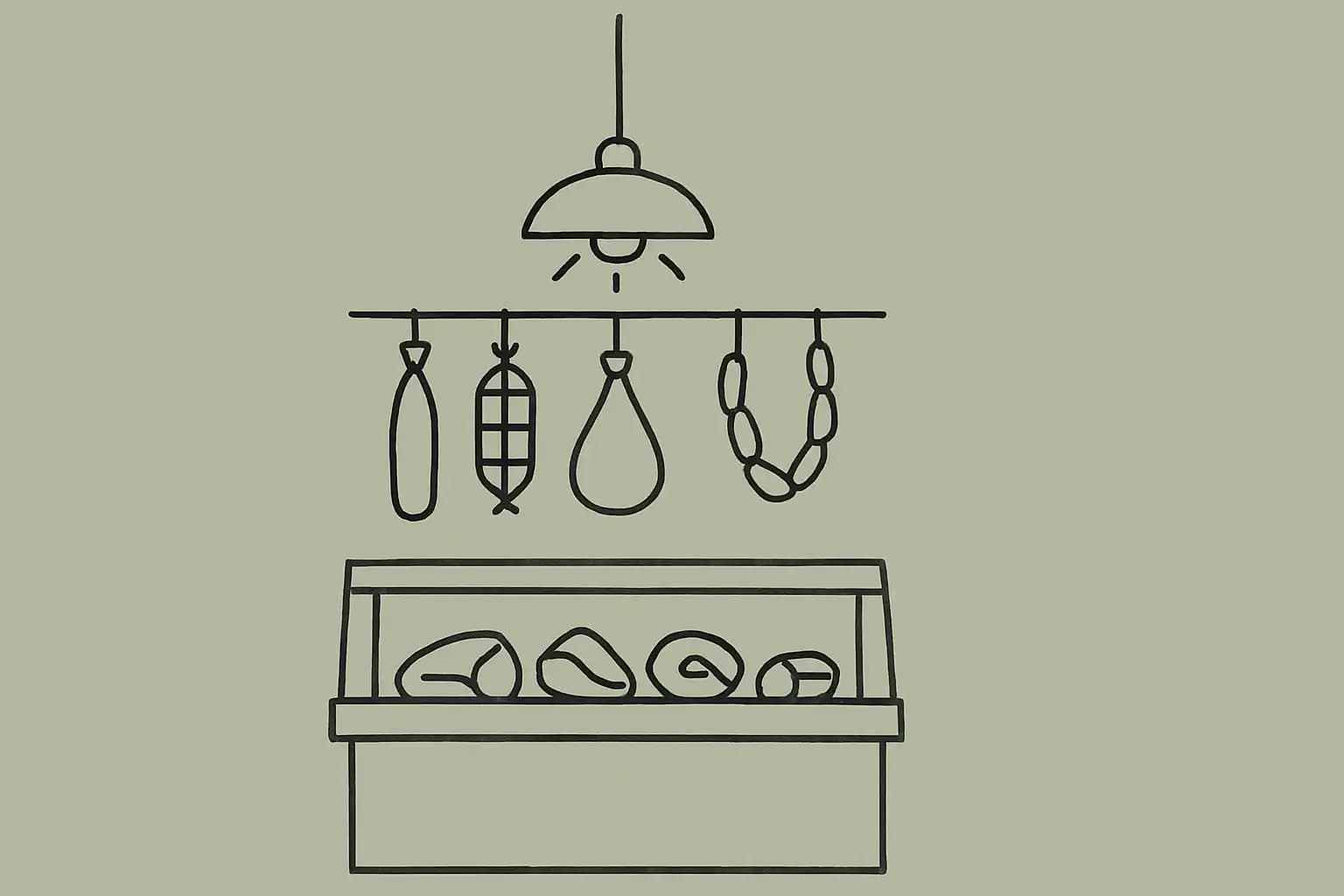
A strip mall in St. Catharines, a pig's head in the display case
The first thing you notice walking into Fat Rabbit is the pig's head chilling behind the glass. The second is the setting: a strip mall on Geneva Street in St. Catharines, wedged between the kind of neighbours you'd expect in a plaza 25 minutes south of Niagara-on-the-Lake. Not exactly where you'd go looking for one of Canada's best restaurants. And that's the point.
Chef Zach Smith opened Fat Rabbit as a hybrid: part whole-animal butchery, part restaurant, part bottle shop, part retail counter where you can pick up house-made ragu or a cylinder of Negroni salami for the road. The concept earned enRoute's #8 Best New Restaurant in 2024 and its Concept of the Year award. Michelin recommended it in both 2024 and 2025. Canada's 100 Best ranked it #48 in 2026. Thirty seats. A strip mall.
Better guest experience. Bigger nights. $299. Once.
Twenty years to get here
Smith has been cooking for two decades, starting in Vancouver before moving east. He landed at Bar Raval in Toronto, Grant van Gameren's pintxo bar on College Street, and stayed four years as chef de cuisine. He also worked at Matty Matheson's Meat & Three in Fort Erie. His wife worked at Bar Raval too. They got married on College and Palmerston, squeezed between the restaurants, with their reception at DaiLo and Lo Pan hosted by Dennis Tay and his team. "We all shared a back alley, and everyone knew everyone," Smith told Foodism.
Then COVID hit. Everyone got laid off. Smith, his wife, and their six-month-old daughter packed up and drove to Niagara to be closer to her family.
What looked like a retreat turned into a permanent move. He hasn't gone back.
Building the whole animal
Fat Rabbit exists because Smith wanted to close a gap he'd seen across every kitchen he'd worked in: the disconnect between people and the proteins on their plates.
"I saw a disconnection between people and the proteins they eat," he told Foodism. "I wanted to put emphasis on the fact that the delicious dish you get at a restaurant came from somewhere, and that somewhere was a life that once existed."
He'd struggled personally with the ethics of meat-eating. The answer wasn't to stop serving it. It was to build a business model where nothing gets wasted and every animal comes from a place worth naming. Linton Pasture Pork, a 70-sow operation in Walton, Ontario, where Jeff Linton crossbred heritage UK and New Zealand breeds to create his own line. Penokean Hills Farms, grass-fed and pea-finished Angus. Beverly Creek, known for Ontario lamb. Perth Pork, the De Martines family farm in continuous production since the 1850s. Smith's head butcher, Justin Upper, handles the whole-animal program and the charcuterie: 'nduja, mortadella, smoked beef pancetta, culatello, all cured in-house.
The menu moves daily. "We are most excited about what's good that day, and that's usually something off the back of a farmer's truck." A pork cutlet might arrive smothered in Japanese curry sauce one week, topped with Mexican salsa verde and hakurei turnips the next. Caesar schnitzel is a fan favourite. The steaks are serious. Dessert leans nostalgic: sticky toffee pudding with sherry-soaked dates. And the cocktails, developed in collaboration with Niagara's Dillon's, hold their own.
Dinner for two runs about $130 before tax and tip. Not cheap, not exclusionary. The kind of bill that reflects real ingredients and a kitchen that respects them.
Choosing Niagara
Most chefs who earn national recognition in a small market use it as a stepping stone back to the big city. Smith did the opposite. "After years of the Toronto grind, the pace of life here, even on our busiest, most chaotic weeks, is something I'm deeply grateful for," he told Foodism.
The gratitude isn't vague. He talks about Niagara peaches in the summer sun. He names the farmers, the local cafes, the family-run Italian place in Welland (The Rex, open since 1915) where his daughter runs around chatting up regulars. "Our blood pressure collectively drops when we get there."
The produce helped too. "Not only is it stunningly beautiful, but some of the best produce I have ever tasted or cooked with is grown right here in our backyard."
Smith credits the community for making it work. "None of this happens without the unbelievable support we've felt here in Niagara, the regulars, neighbours, farmers, winemakers, visitors, and the team who show up and make it all go."
Three restaurants, one strip
Fat Rabbit was the start. Then came Bar Les Incompetents, a French-ish bistro on St. Paul Street in downtown St. Catharines, built inside the restored Old Lincoln Theatre. The name comes from Home Alone ("You're what the French call 'les incompetents'"). Smith opened it with friends Owen Walker, Bernard Lim, Geoff Dillon, and Adam D'Intino. Raw bar, seafood-forward snacks, natural wine, cocktails. "Not too serious, but serious enough."
The third is Sunset Steak and Cheese, expected to open in November 2026 inside the former Sunset Restaurant, a diner that's been on the same block since 1956. Smith is keeping the original booths and the lived-in feel. "It would be a shame to buy a restaurant that's been around since 1956 and immediately erase everything that made it recognizable."
The menu is steak-and-cheese sandwiches, Italian subs, hot dogs, chili-cheese fries. Deliberately simple. Deliberately cheap. "St. Catharines has an incredible food scene developing, but I think there's room for more restaurants that are deliberately simple and affordable," Smith told Toronto Life. "Not every restaurant needs to be for special occasions."
Three concepts, three price points, one small city. A Michelin-recommended butchery. A playful French bistro. A neighbourhood sandwich shop preserving a 70-year-old diner. That range says something about what Smith thinks a chef's job actually is: feeding people, at whatever level they walk in at.
Back to Raval, on his terms
In February 2026, Smith went back to Bar Raval. Not as a returning employee. As executive chef and co-owner, partnering with van Gameren and Hailey Burke. He visits Toronto once a week. The other six days, he's in Niagara.
"My Niagara spots are my babies," he said. "I have a great team in place that I can count on." His role there has shifted: menu development, mentoring, the owner-operator work that keeps things moving. The new Bar Raval menu is a return to pintxos: truffled triple-cream brie with Iberico salchichon, boquerones, pickled things on skewers.
Leaving Toronto during COVID could have been the end of that chapter. Instead, building something from scratch in Niagara gave Smith the standing to return on different terms. He's not choosing between the city and the region. He's running both, because he built the kind of operation that doesn't need him on the line every night.
What other restaurateurs can take from this
Fat Rabbit is expanding from 30 seats to 90 with a private dining room. But the core hasn't changed: whole animals, local farms, a menu that moves with the season, a room where the chef's counter (four stools overlooking the kitchen) is the best seat in the house.
The pattern worth studying isn't the accolades. It's the sequence. Leave the city. Find a market where the produce is better and the rent is lower. Build one concept that does something specific and does it well. Then build around it: a bistro, a sandwich shop, a partnership back in the city. Each one feeds the others, and none of them require the same chef to be in the same kitchen every night.
Smith didn't plan any of this. COVID forced the first move. But every move after that was a choice: to stay in a strip mall, to name his farms, to open a sandwich joint in a 70-year-old diner, to go back to Raval as an owner rather than an employee.
"You should be able to walk in and order a steak-and-cheese and a cold beer without having to think too hard about any of it." That sentence could describe Sunset. It could also describe what Smith is building across St. Catharines: restaurants where the cooking is serious and the experience isn't.
Sources: Foodism CA (restaurant profile), Foodism CA (Chef's Best), Toronto Life (Bar Raval), Toronto Life (Sunset Steak and Cheese), Canada's 100 Best, Fat Rabbit.