Tony Holden (Atelier Tony, Boulangerie Tony): basement croissants to Dieppe's French table
In 1982, a kid from Shea Heights, Newfoundland, walked into a hotel kitchen in Digby, Nova Scotia and watched a pastry chef from Quebec City pull croissants from the oven. Tony Holden had no formal training, no plan to make pastry his life. But something locked in that day. Four decades later, he runs three operations across greater Moncton, employs more than 60 people, and has turned a bilingual New Brunswick city into a quiet destination for French cooking.
The path between those two points is the part worth knowing.
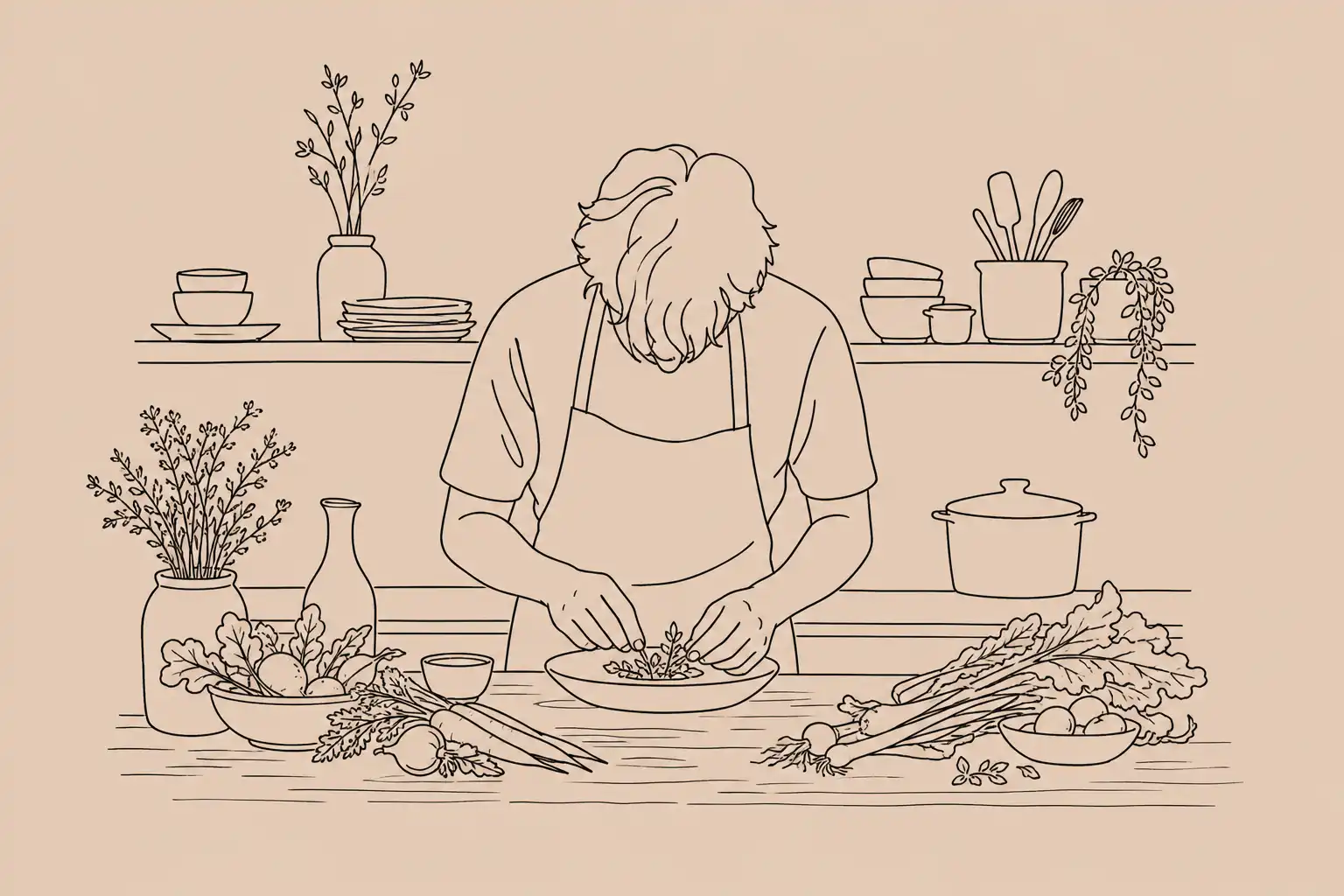
Croissants in the basement, customers at the market
Holden spent years in hotel kitchens after Digby. Jasper Lodge in Alberta. Keltic Lodge in Cape Breton. Hotel Newfoundland back home. The Delta Beausejour in Moncton, where he landed and stayed. Hotels teach you discipline and volume, but they don't let you build something that's yours.
So he started making croissants in his basement.
Every Saturday morning, he'd bring them to the Dieppe Farmers' Market and sell out. Every single time. The feedback was too clear to ignore: the croissants were better than anything else available in the region, and people wanted more.
In 2001, Holden found a small space and opened a two-table pastry shop. He started making sandwiches on his croissants, then added soups, then breakfast. The two tables became Tony's Bistro & Patisserie, which expanded in 2013 to seat 75 guests. By 2018 it had taken over the insurance office next door.
The whole time, Holden was still the executive chef. Still making pastry. Still buying ingredients at the Saturday market.

Reservation software. Free for Canadian restaurants. $0 a month
The family that runs the business
Atelier Tony doesn't exist as a solo act. Holden is clear about this: "There is just no way Atelier Tony would exist without the rest of my family."
Each person in the Holden operation fills a role that would take years to hire externally. June Holden, Tony's wife, manages the back office and finances. Jordan Holden, the younger son, is executive chef at Atelier Tony, running a seasonally rotating French menu built on PEI beef, local oysters, and Maritime ingredients cooked with classical European technique. Chris Holden, the older son, handles marketing, customer experience, and manages the bar program. Naketah Gallant, Chris's partner, runs the front and back of house and is considered family by everyone involved.
The division works because the expertise is genuinely complementary. Tony brings pastry and training. Jordan brings the savoury kitchen. Chris brings the hospitality and brand sensibility. June keeps the numbers honest. Gallant holds the daily operations together.
This is not a case of family members being given jobs. It's a case of people who grew up in the business and brought skills the business needed. Jordan was watching his father make truffles and mille-feuille in the family basement while he was in elementary school. By the time Atelier Tony opened, he'd been in kitchens for most of his life.
Opening during a pandemic, on purpose
When COVID-19 hit in 2020, the Holdens were already committed to expanding. They'd signed a lease at 50 Rue du Marche in Dieppe, across the street from the Saturday market where Tony had been buying local produce for years. Two concepts under one roof: Boulangerie Tony on one side (bakery, pastry, coffee, quick service) and Atelier Tony on the other (sit-down French restaurant, cocktail bar, full dinner service).
Most operators would have paused. The Holdens didn't.
"I don't think Covid is going to go on forever," Tony told Huddle. "I'm in the food business. People still got to eat."
They turned the pandemic into a training window. With so many talented hospitality workers laid off across the Maritimes, the Holdens could be selective about who they hired. And with restrictions limiting capacity, they had time to train the new team properly before facing a full dining room.
"We were able to hand-pick from the best of the best to operate the restaurant," Tony said. "We had time to train our people properly and extensively and make small changes to the flow of the kitchen. It was a bonus to be able to do this on our own instead of in front of customers."
The restaurant opened to immediate buzz. [EDIT] Magazine called it "one of the best new French restaurants in Canada."
Rooted across the street from the market
The location is not an accident. The Holdens chose 50 Rue du Marche specifically because of its proximity to the Dieppe Farmers' Market, where Tony had been a customer and a vendor for years.
"The market is a hub for local meat and produce," Chris Holden explained to EDIT. "We can meet with the farmers and fishmongers face to face every weekend while hand-selecting the best."
That habit of buying from producers you actually know extends through the entire operation. Tableware is handcrafted by local potters. The artwork on the walls comes from artists who live down the street. Coffee is from Epoch Chemistry, a local roaster. The beer and wine list is curated by the serving team's sommeliers from local and regional producers. Even the playlists feature local musicians, some of whom play live on certain nights.
The interior, designed by Tuck Studio in Saint John, was meant to feel like a Parisian bistro dropped into a modern glass-and-concrete shell. Curved wood walls, floral wallpaper, artisan tiles, warm fabrics, fireplaces. Customers regularly tell the Holdens they feel like they're in Paris, Quebec City, or Montreal. The fact that it's in Dieppe, New Brunswick, a city of about 30,000, is the point.
Growing by trusting people
The thread running through the Holden story is a simple management philosophy that most restaurant owners talk about but few actually practice: trust your team, and grow so they can grow.
"My focus has always been quality and training," Tony said. "When I was small, if I just stayed by myself and I didn't trust other people to do some of the jobs that I do, I could never grow. People can surprise you if you give them the chance."
He has a pastry chef who's been with him for 12 years and now runs the entire pastry department, the kind of retention that no wage bump on its own buys. The expansion to Dieppe happened specifically because the team at Tony's Bistro was strong enough that several people could be freed up to start something new without the original location suffering.
"We don't want to lose anybody and this is why we want to grow, so we give people who are working here right now an opportunity to move up in the company," Tony said.
The service model at Atelier Tony reflects the same thinking. There are no server sections. No one is solely responsible for a single table. Each team member has a specialty, whether that's wine service, food presentation, or something else, and they work as one unit. Everyone tries to greet each table at least once without overdoing it.
"We have all had wonderful meals made awkward by an overbearing server," Chris said. "We understand the delicacy of serving a guest: educating them, being educated by them, and the slippery slope of taking up too much space."
What other operators can take from this
Tony Holden spent almost 20 years in hotel kitchens before he started selling croissants out of his basement. The overnight success story here is actually a 40-year story. The croissants didn't appear from nowhere. The family didn't just fall into complementary roles. The team at Tony's Bistro didn't get strong enough to support a second location by accident.
What Holden built is a quiet case study in patience, taste, and letting people grow. He stayed in Moncton when a more ambitious chef might have left for Toronto or Montreal. He trusted family members to take ownership of parts of the business he'd built alone. He expanded during a pandemic because his people were ready and the location was right.
Fine food, casual atmosphere. French technique, Maritime ingredients. Seventy-five seats in Moncton, sixty more in Dieppe, all of it still running on Saturday market relationships and basement-era standards.
"We don't want to open until we're ready," Tony said, "because I think you get one chance to make a good first impression."
He got that impression right in 1982. He's been refining it since.
Sources: EDIT Magazine, Huddle, Huddle (expansion announcement), Saltscapes, Tony's Bistro.