Ricky Casipe & Olivia Simpson (Ricky + Olivia): the restaurant that started with a first kiss
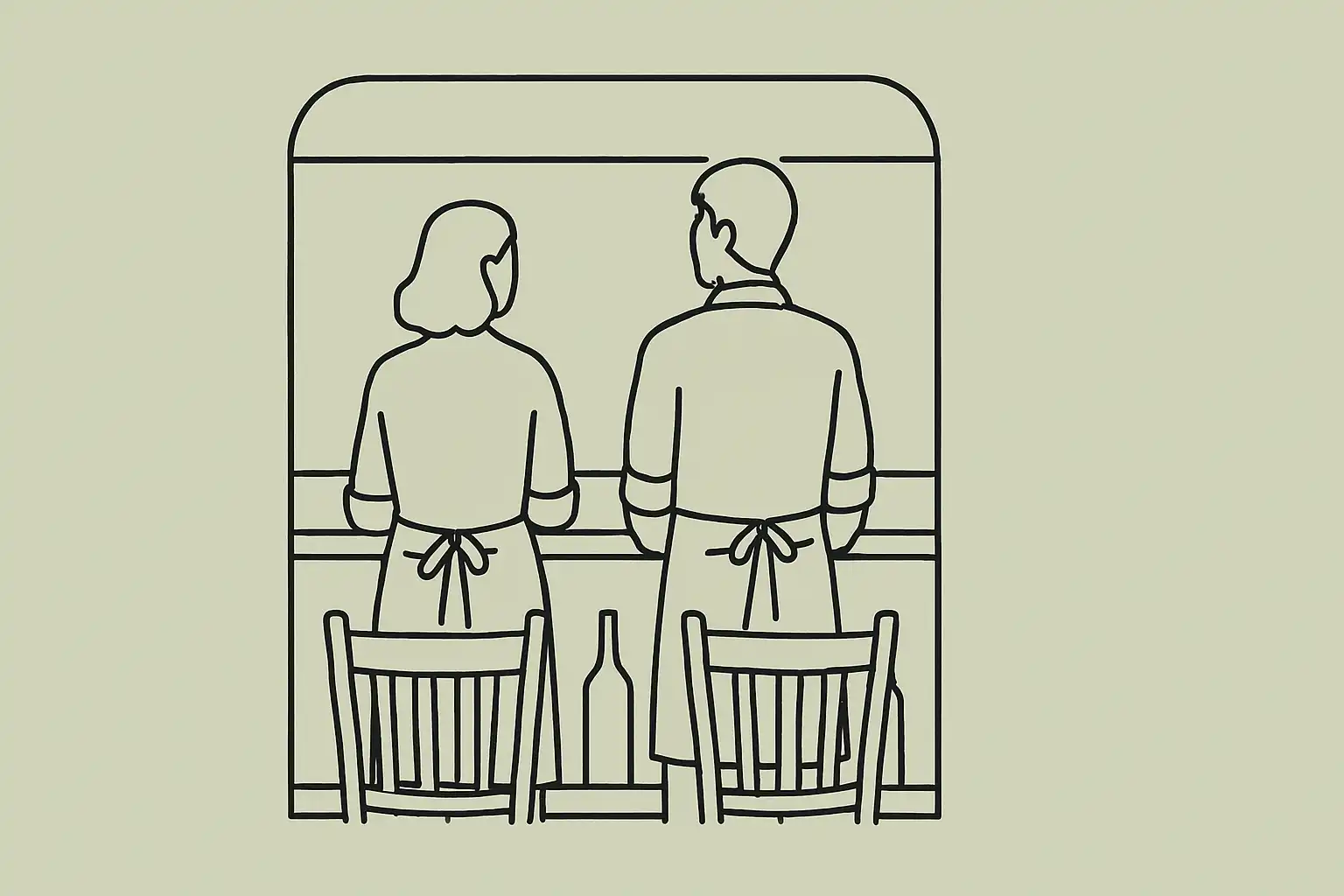
Ricky Casipe was the executive chef at Hawthorne Food and Drink, one of Toronto's early farm-to-table restaurants. Olivia Simpson walked in as his sous-chef. They fell for each other, but overlapping shifts meant they were always in the same kitchen and never in the same room at the same time. So they did the thing nobody advises: they both quit.
That decision, impractical and a little reckless, set everything else in motion.
The long way around
Before Ricky + Olivia the restaurant, there was Ricky + Olivia the pop-up operation. Starting in 2018, the couple hosted events across the GTA, cooking together for the first time without the structure of someone else's menu. They became chef ambassadors for Feast On, the Culinary Tourism Alliance's local sourcing certification, and travelled the province meeting farmers, cheesemakers, and winemakers they'd eventually build a restaurant around.
For five consecutive summers, they cooked at Westcott Vineyards in Jordan, Ontario, running a patio restaurant with a wood-fired grill and bread oven. Niagara shaped their palate. It also gave them time, which is the thing most cooks never get enough of: time to develop recipes slowly, to learn Ontario wine deeply, to figure out who they were as a team.
Olivia had already built serious credentials on her own. She'd studied food science at George Brown, then staged at Blue Hill at Stone Barns, Dirt Candy, and Mission Chinese Food in New York before returning to Toronto. She worked at Bar Buca, Saturday Dinette, and Oliver & Bonacini Catering. When Ricky left Hawthorne for Aft Kitchen and Bar, Olivia took over his position as executive chef. She wasn't following him. She was building her own track record.
Ricky, meanwhile, grew up watching both his parents cook Filipino food at home. Pan de sal, the sweet bread rolls that show up on the Ricky + Olivia menu, comes directly from that kitchen. So does his instinct for sweet-and-savoury combinations. "My mom calls it breaking the taste," he's explained, her way of describing why food needs that balance.
Better guest experience. Bigger nights. $299. Once.
The bar where it started
In 2022, walking through Leslieville, they spotted a "Bar for Rent" sign at 996 Queen Street East. The previous tenant was Wayla Bar. The same bar where Ricky and Olivia had shared their first kiss.
They signed the lease and did the renovation themselves, with help from their third partner, Adrian Proszowski, a front-of-house veteran and former Hawthorne colleague. The build-out wasn't fast and it wasn't fancy. It was two people with calloused hands turning a narrow storefront into something that felt like home.
Ricky + Olivia opened in April 2024. The front is a bottle shop stocked exclusively with Ontario wine, beer, and spirits, including vintages most Torontonians have never heard of. The back is a 30-seat dining room with an open kitchen, high ceilings, refurbished wooden tables, and intensely blue chairs. There's a small patio hidden at the north end.
Nostalgia as a menu strategy
The menu is playful in a way that only works when the cooking underneath is serious. A steak tartare made with hand-cut hanger steak, iceberg lettuce, Cheez Whiz, and a sous-vide egg yolk, served on deep-fried saltines, is described as being "dressed like a Big Mac." Chicken liver mousse shows up as PB&J. There are "adult Kraft Lunchables."
None of this is gimmicky because none of it is lazy. Every dish sources from Ontario producers, and the nostalgia is specific: these are the snacks Ricky traded at recess growing up (Oreos for Dunkaroos, the origin story he tells most often). The playfulness is personal, not performative.
That approach earned them a Michelin Bib Gourmand in the 2025 Guide, recognition for great food at reasonable prices. Foodism included them in their 23 best restaurants in Toronto for 2026.
What other operators can take from this
Three patterns stand out.
First, the long runway. Ricky and Olivia spent six years between quitting their jobs and opening their restaurant. Four years of pop-ups, five summers in Niagara. That wasn't indecision. It was preparation. By the time they signed the lease, they knew their suppliers, their wine list, their audience, and each other's cooking inside out. Most restaurant partnerships skip this step entirely, and it shows up later on the list of reasons new restaurants close.
Second, the all-Ontario commitment. Every bottle in the shop, every protein on the menu, comes from the province, which is further than most restaurants take local sourcing. This isn't a marketing angle they bolted on after opening. It's the foundation they built during those years on the road with Feast On. It also simplifies sourcing, shortens supply chains, and creates real relationships with producers who show up when things get tight.
Third, they did the work themselves. The renovation, the design, the bottle shop curation. When you're a 30-seat independent, every dollar you don't spend on consultants and contractors is a dollar that goes into surviving your first year, and the build-out is where most opening budgets quietly disappear.
The restaurant is named after the people who built it. That's not branding. That's accountability. Every plate that leaves the kitchen, every bottle on the shelf, has their names on it. In an industry full of concept restaurants and investor decks, that still counts for something.
Sources: TasteToronto, Foodism, Toronto Life, Notable Life, Streets of Toronto, Michelin Guide.