Are Restaurant Loyalty Programs Worth It? The Math
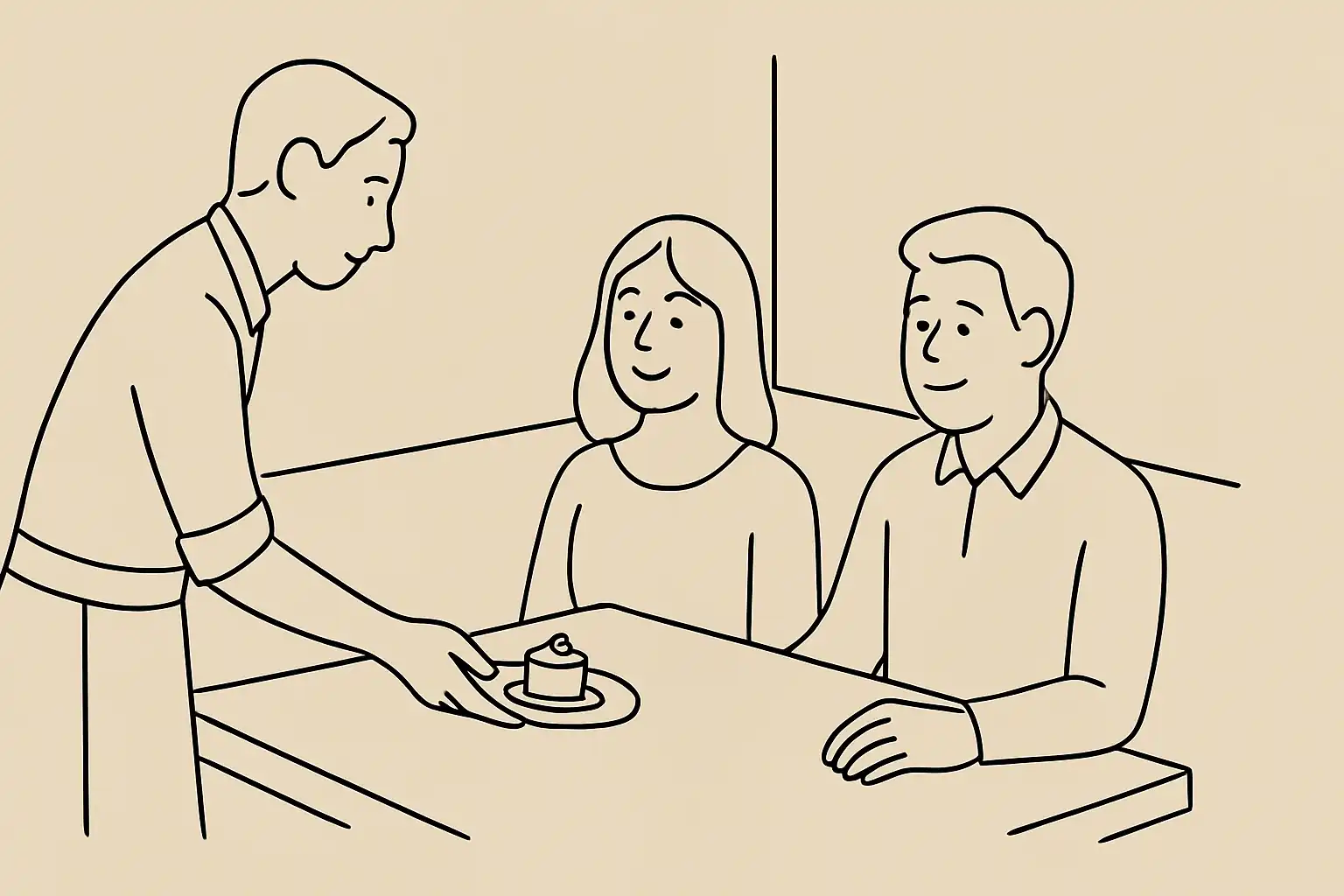
Your loyalty members visit more often and spend more than everyone else. That's what the vendor dashboards show, and it's true. It's also mostly not the program's doing. The guests who sign up first are the ones who were already coming every other Thursday. So the honest answer to "is a loyalty program worth it for an independent?" is: sometimes, and only if you set it up for the guests it can actually change.
Here's how to tell which side of that line you're on, with the numbers for a 40-seat room.
Do loyalty programs actually bring guests back more often?
A little. Less than the reports suggest.
Loyalty platforms publish big gaps. Paytronix, which runs programs for restaurant chains, reports that members visit about 20% more often and spend 38% more per visit than non-members. Those numbers compare two groups of people. They don't compare the same people before and after the program existed.
That difference matters. When researchers at Tilburg and Erasmus universities tracked Dutch households across seven grocery loyalty programs, they found that 86% of the apparent membership effect disappeared once they accounted for who chooses to join. The real effect was positive and statistically significant. It was also about seven times smaller than the simple member-versus-everyone comparison suggested.
Grocery isn't dinner, and share of wallet isn't visit frequency. But the mechanism carries straight over to your dining room: the people most likely to ask for a stamp card are your regulars.
Better guest experience. Bigger nights. $299. Once.
Why do loyalty members spend more than everyone else?
Because loyal guests join loyalty programs. It's that simple, and it's why the "members spend 38% more" figure can't be your business case.
Think about who signs up the first week you launch. The couple who has had the same corner table since 2022. The guy who orders the braised short rib every single time. They were going to come back anyway. Now they get a free dessert every tenth visit for doing what they already did.
That's not a disaster. Rewarding regulars can be a nice gesture. It just isn't growth, and you shouldn't pay for it as if it were.
What does a loyalty program cost a 40-seat restaurant?
Two costs: the software (if any) and the rewards. The rewards are the one people underestimate.
Here's a working example. A 40-seat bistro has 200 active members. Each visits about once a month and spends $60 per visit (a table of two, mains and a glass each). The program gives a reward every tenth visit, so 20 rewards go out each month.
| Setup | Reward | Monthly reward cost | Software | Total monthly cost |
|---|---|---|---|---|
| A. Dollar-off + POS loyalty | $20 off the bill | $400 | $60 (Square Loyalty, Canada) | $460 |
| B. Dish reward + POS loyalty | Free dessert ($12 on the menu, about $4 in food cost) | $80 | $60 | $140 |
| C. Dish reward + paper punch card | Free dessert | $80 | About $4 (cards printed once a year) | $84 |
Look at the gap between A and C. Same program, same guests, same number of rewards. Setup A costs five times as much, and almost all of the difference is the reward format.
A $20-off reward costs you $20 of revenue. A $12 dessert costs you roughly $4 of ingredients. On a restaurant margin, that's the whole ballgame. Full-service restaurants in Canada typically net somewhere around 3 to 5%, so a dollar off the bill is a dollar straight out of the thinnest part of your P&L.
Square's pricing is also worth knowing: $60 a month per location covers up to 500 loyalty visits, then it steps to $100 and $140. A loyalty visit counts every enrolment, earn or redemption. Wallet-based stamp cards like Loopy Loyalty start at US$25 a month if you want something digital without a POS add-on.
How many extra visits does it take to break even?
This is the question to ask before you print a single card.
Say each extra visit is worth about $35 to you: the $60 cheque minus food, drink and card fees. That's a rough figure; plug in your own. Now divide each setup's monthly cost by $35:
| Setup | Monthly cost | Extra visits needed per month | Lift needed on 200 monthly visits |
|---|---|---|---|
| A. Dollar-off + POS loyalty | $460 | 13 | 6.6% |
| B. Dish reward + POS loyalty | $140 | 4 | 2.0% |
| C. Dish reward + paper card | $84 | 2.4 | 1.2% |
Now hold that against the research. If the vendor figure of 20% more visits shrinks anywhere near as much as the grocery study found once you remove self-selection, the real lift lands in the low single digits. Setup A is a coin flip at best. Setup C pays for itself if two or three guests a month come in who otherwise wouldn't have.
That's the discovery hiding in the math: the question isn't really "loyalty program or not." It's "what does the reward cost me when I hand it over?"
Who does a loyalty program actually change?
Not your regulars. Your almost-regulars.
A long-term study of a convenience store franchise's loyalty program, published in the Journal of Marketing, found that heavy customers claimed the most rewards but didn't change how they shopped. The light and moderate customers were the ones who gradually came more often and became more loyal.
Put that in dining room terms. The guest who came once in the spring and once in August is the one a program can move. The regular with a usual order is already moved.
So design for the second and third visit, not the tenth:
- First reward early. Visit three, not visit ten. A reward the occasional guest will actually reach is the only kind that changes an occasional guest.
- Something they'd order anyway, on the house. A dessert, a starter, a glass of the house red. Low food cost, high perceived value, and it gets them to try more of the menu.
- A reason to come back soon. "Your next visit this month gets the first reward" beats a card that sits in a wallet until it fades.
If you already have a design question on your hands (tiers, stamps, points, apps), our loyalty program design guide walks through the structures, and the overview of loyalty programs for Canadian independents covers the tool options.
When is a loyalty program not worth it?
Skip it, or pause it, if any of these describe you:
- You're full most nights. If Friday and Saturday already turn away tables, a program mostly discounts demand you already have. Aim any reward at Tuesday and Wednesday or don't run one.
- Your plan is dollars off. Rework the reward before you launch, or the math in setup A is waiting for you.
- Nobody will track it. A program nobody checks is a cost you'll never measure. Count the stamps redeemed every month, and whether first-time guests are coming back sooner.
- You're competing on the wrong field. The LoyalT 2025 study of 15,000 Canadians found the average person belongs to 22 loyalty programs but only uses 9 regularly. Burger King's Royal Perks topped the national ranking, with Domino's leading in Quebec. You won't out-app a chain for a spot on someone's home screen. You don't need to.
What do regulars want instead of points?
To be known.
One operator put it plainly on r/restaurateur this month: knowing your regular customers and making them feel valued "would work better than some complicated loyalty apps." That's the edge a chain can't copy with a points balance. They have millions of members. You have a few hundred names, and you can actually remember them.
Recognition costs nothing in food cost:
- The usual table, held when they book.
- Their name at the door, and their usual order mentioned before they ask.
- A note that it's their anniversary, or that they hated the cilantro last time.
- A taste of the new dish before it hits the menu.
For regulars, that's the program. Save the stamp card for the guests who haven't become regulars yet, and make sure your guest history (who came, when, what they liked) lives somewhere your whole team can see it. If you're collecting phone numbers or emails to do this, check the privacy rules for guest data in Canada first.
So, is a restaurant loyalty program worth it?
For most independents, yes, if you do three things. Pay rewards in dishes, not dollars. Put the first reward within reach of an occasional guest. And treat your regulars with recognition rather than points, because they were never the ones the program needed to convince.
Get those right and a loyalty program costs you less than a slow Tuesday. Get them wrong and you're paying your best guests to keep doing what they already love doing.
If you're weighing this against other ways to spend the same money, our marketing budget guide for Canadian independents puts loyalty next to everything else competing for that line.
Sources: Leenheer et al., International Journal of Research in Marketing (2007), Liu, Journal of Marketing (2007), Paytronix restaurant loyalty ROI, LoyalT 2025 via Retail Insider, Square Loyalty pricing, Canada, ISED Canadian Industry Statistics, NAICS 7225.
Frequently Asked Questions
Are restaurant loyalty programs worth it for independent restaurants?
Yes, when the reward is a dish rather than dollars off and the first reward is reachable within two or three visits. A dessert reward on a paper card can break even with two or three extra visits a month. A $20-off reward on paid software can need a 6 to 7% lift in visits, which most programs won't deliver.
Do loyalty programs actually make guests come back more often?
Somewhat, but less than vendor reports suggest. A Dutch study of seven loyalty programs found 86% of the apparent member advantage came from already-loyal customers choosing to join. The real effect was positive but about seven times smaller than a simple member versus non-member comparison.
Do loyal customers spend less than new customers?
Loyalty members usually spend more per visit than non-members. Paytronix reports 38% more. But that gap mostly reflects who joins: regulars sign up first. The spending difference is a description of your best guests, not proof the program created it.
How much does a restaurant loyalty program cost in Canada?
Square Loyalty costs $60 a month per location for up to 500 loyalty visits, then $100 and $140. Wallet stamp cards like Loopy Loyalty start at US$25 a month. Paper cards cost a few dollars. The bigger cost is the rewards: a $20-off reward costs $20 of revenue, a $12 dessert about $4 in food cost.
Who does a restaurant loyalty program actually change?
Occasional guests. Research on a convenience store franchise found heavy customers collected the most rewards without changing behaviour, while light and moderate customers gradually came more often. For a restaurant, that means designing rewards around the second and third visit, not the tenth.