Loyalty Programs for Independent Restaurants in Canada

Your regulars already come back. They don't need an app to remind them.
That's the part most loyalty program guides skip over. They jump straight to software comparisons and point systems, as if every 30-seat bistro needs the same infrastructure as Tim Hortons. The truth is simpler: the best loyalty program for an independent restaurant is one your team can run without thinking about it, and for many operators, that doesn't require software at all.
But there's a threshold. Once you can't remember every regular's name, once your team rotates enough that institutional memory fades, once you're turning 200+ covers a week, something more structured starts to make sense. The question isn't whether loyalty programs work. They do: members visit 20% more often and spend 20% more per visit. The question is which version fits your restaurant right now.
Why independents have an unfair advantage
Chains spend millions trying to manufacture what you already have: a personal connection with your guests.
When a regular walks in and the bartender starts making their drink before they sit down, that's loyalty. No points required. 76% of Canadian consumers say they favour restaurants with loyalty programs, but what they really favour is being recognized. The program is just a vehicle.
Here's where it gets interesting for independents. The restaurant industry averages only 55% customer retention, which is well below the 75.5% global average across industries. That gap is mostly chains losing people to the next chain. Independent restaurants that know their guests by name, that remember the anniversary table, that comp a dessert when someone's had a rough week: they're already beating the industry average. A loyalty program formalizes what you're doing naturally, so it scales beyond your personal memory.
And the math is worth paying attention to. A 5% increase in customer retention correlates with at least a 25% increase in profit. Keeping a customer coming back costs 5 to 7 times less than acquiring a new one. For an independent with tight margins, that's the kind of number that changes how you think about Tuesday nights.
Better guest experience. Bigger nights. $299. Once.
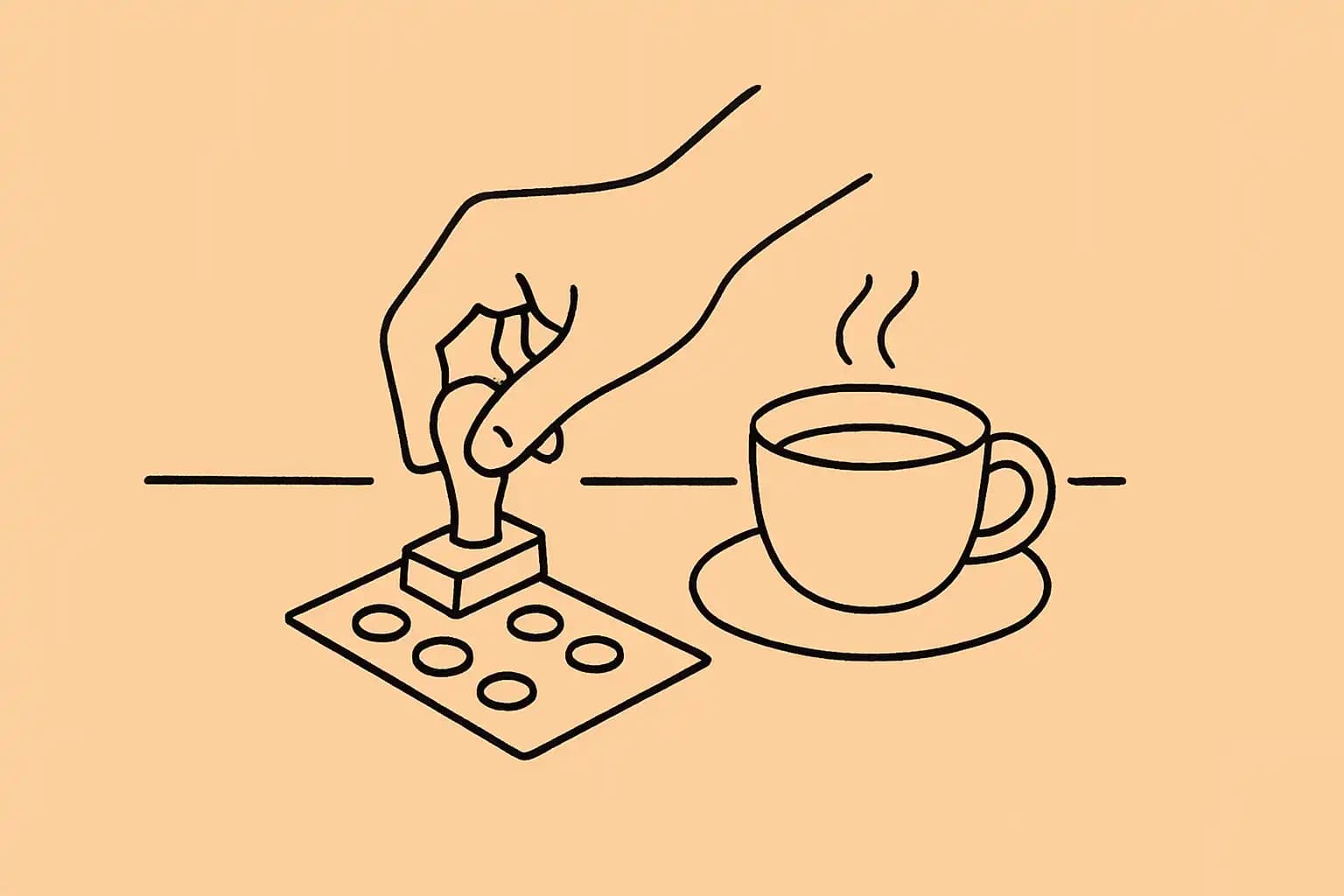
Paper punch cards: not dead, not embarrassing
Every loyalty software company will tell you punch cards are outdated. They have a point, and they also have a product to sell.
The reality: 47% of paper punch cards never get redeemed, and 39% of customers abandon paper programs because they lose the card. Those are real numbers. But for a coffee shop doing 80 transactions a day, or a lunch counter with a tight radius of office workers, a punch card is zero monthly cost, zero staff training, and zero friction. The customer gets it instantly. Buy nine, get one free. Done.
Where punch cards break down:
- You can't track who your best customers are
- You can't send a message when someone hasn't been in for a month
- You have no data on visit frequency or average spend
- Fraud is trivially easy (a hole punch costs $3)
If those limitations don't bother you, a punch card is perfectly fine. Run it for a year. See what happens. You can always upgrade later. The worst loyalty program is the one you paid $100/month for and nobody on your team remembers to mention.
The digital middle ground: no app required
Between a paper card and a full loyalty platform, there's a sweet spot that works well for independents: digital punch cards and phone-number-based programs.
The concept is simple. Instead of a physical card, the customer gives their phone number at checkout. The system tracks visits or points automatically. No app download, no account creation, no friction.
Digital programs increase visit frequency by 30 to 40% over paper cards, mostly because customers can't lose a phone number. Redemption rates are 25 to 35% higher. And you get data: who's coming, how often, what they're spending.
Several options work in Canada without requiring customers to download anything:
- QR code stamp cards (BonusQR, Stamp Me): Customer scans a QR code at the table or register. Their digital card lives in their phone's browser or mobile wallet. No app. Starts around $30 to $50/month.
- SMS-based programs: Customer texts a keyword to join. Rewards tracked via text message. Good for quick-service, pickup-heavy operations.
- POS-integrated loyalty: If you're already on Square, Toast, or Lightspeed, loyalty is built into the system your staff already uses. More on this below.
The key question: does the data justify the cost? If you're doing fewer than 100 transactions a day, a $50/month tool needs to drive roughly two extra visits per day to pay for itself. At a $25 average cheque, that's doable. But be honest about whether you'll actually use the data or just pay for reports nobody reads.
POS-integrated loyalty: what's available in Canada
If you're going to pay for loyalty software, the easiest path is whatever plugs into the system your team already touches every shift.
Here's what's available in Canada, with honest trade-offs:
Square Loyalty starts at roughly $45/month and scales based on loyalty visits. It's included in the Plus plan ($60/month per location). If you're already on Square, this is the path of least resistance. Staff enrollment happens at checkout. Customers earn points on every purchase. Rewards are simple to configure.
The limitation: it only works within Square's ecosystem. Reporting is basic. If you outgrow Square's POS, you outgrow the loyalty program with it.
TouchBistro Loyalty costs $99/month and connects deeply to TouchBistro's front-of-house and back-of-house systems. It's strong for full-service dine-in operations. But it's not available in Quebec, which is a significant gap for a Canadian product. And $99/month is a real commitment for a single-location independent.
DataCandy runs $125/month per location plus a $500 setup fee. It's Canadian-built, bilingual (English and French), and combines loyalty with gift cards in one platform. The price point makes more sense for restaurants doing serious volume or operating multiple locations. For a single 40-seat restaurant, that's $1,500/year before you've sent a single reward.
Lightspeed includes loyalty features in its Premium plan at $269/month (billed annually). Unless you're already on Lightspeed Premium for other reasons, paying that much specifically for loyalty doesn't make sense for most independents.
The honest take: For a single-location independent already using Square, Square Loyalty is the practical choice. For everyone else, evaluate whether the monthly cost actually drives enough incremental visits to justify itself. A $100/month program needs to generate roughly $200 to $300 in additional monthly revenue just to break even, before you count the time spent configuring rewards and training staff.
What to reward (and what not to)
The structure of your rewards matters more than the technology behind them.
Visit-based rewards ("Come 10 times, get a free appetizer") work best for high-frequency spots: cafes, lunch counters, fast casual. They're simple and they drive the behaviour you want: more visits.
Spend-based rewards ("Earn 1 point per dollar, redeem at 100 points") work better for full-service restaurants where ticket sizes vary. They reward the behaviour that actually matters to your bottom line.
Birthday rewards are low-effort and high-impact. Collect a birth month (not the full date, nobody wants to share that), send a simple email or text offering a free dessert. It costs you $4 in food cost. The customer brings three friends. You net $80.
What doesn't work for independents: tiered programs with bronze/silver/gold levels. You don't have the volume to make tiers meaningful, and your regulars will resent being sorted into categories. Leave that to airlines.
A caution on discounts: "10% off your next visit" trains customers to wait for the discount. Instead, reward with experiences: a free appetizer, a dessert on the house, early access to a seasonal menu. These cost you food cost, not revenue.
When you don't need any of this
Some restaurants genuinely don't need a loyalty program. If you're a fine dining spot doing two seatings a night, your loyalty is the experience itself. If you're a neighbourhood spot with 30 seats and you know 80% of your customers by first name, a points system adds nothing.
The signs you might need something more structured:
- Staff turnover means new servers don't know the regulars
- You're doing 150+ covers a day and can't track who's who
- You want to bring back lapsed customers but have no way to reach them
- You're running promotions but can't measure whether they drove repeat visits
If none of those apply, keep doing what you're doing. Buy the regular a coffee. Remember the allergy. Ask about the kid's hockey game. That's loyalty. No software required.
Getting started without overthinking it
Pick one approach. Run it for 90 days. Measure whether repeat visits increase.
If you're just starting out: paper punch card or QR-based digital card. Zero to $50/month. See if your customers engage before you invest in software.
If you're on Square, Toast, or TouchBistro: turn on the built-in loyalty feature. Your staff already knows the POS. Adding loyalty to checkout takes five minutes of training.
If you're doing 200+ covers daily and want data: invest in a POS-integrated or standalone platform. Set up automated win-back messages for customers who haven't visited in 30 days. That single automation will likely pay for the tool.
Regardless of what you choose: keep it simple. One reward structure. One way to earn. One clear payoff. 68% of diners feel overwhelmed by the number of loyalty programs they're enrolled in. Your program should feel like a bonus, not homework.
The independents who do loyalty best aren't the ones with the fanciest software. They're the ones who made their guests feel like they belonged somewhere. The program just helps you do that at scale.
Sources: Restroworks, Toast Canada, StampMe, DataCandy, Restobiz.
Frequently Asked Questions
How much does a restaurant loyalty program cost in Canada?
Costs range from free (paper punch cards) to $125+/month for dedicated platforms. POS-integrated options like Square Loyalty start around $45/month. For most single-location independents, $0 to $60/month covers practical options.
Do loyalty programs actually work for small restaurants?
Yes. Loyalty members visit 20% more frequently and spend 20% more per visit. A 5% increase in customer retention correlates with a 25% increase in profit. The key is matching program complexity to your restaurant's size and volume.
What's the best loyalty program for a single-location restaurant?
If you're already using Square, Square Loyalty is the simplest path. If you're on another POS, check whether it has built-in loyalty features first. For very small operations, a paper punch card or QR-based digital card works fine.
Do I need an app for my restaurant loyalty program?
No. Phone-number-based programs, QR code digital cards, and POS-integrated systems all work without requiring customers to download an app. Avoiding app downloads removes the biggest friction point for sign-ups.
When should an independent restaurant invest in loyalty software?
When you're doing 150+ covers daily, experiencing staff turnover that erodes customer knowledge, or want to run automated win-back campaigns for lapsed customers. If you know most regulars by name, you likely don't need software yet.