Social Media Strategy for Independent Restaurants
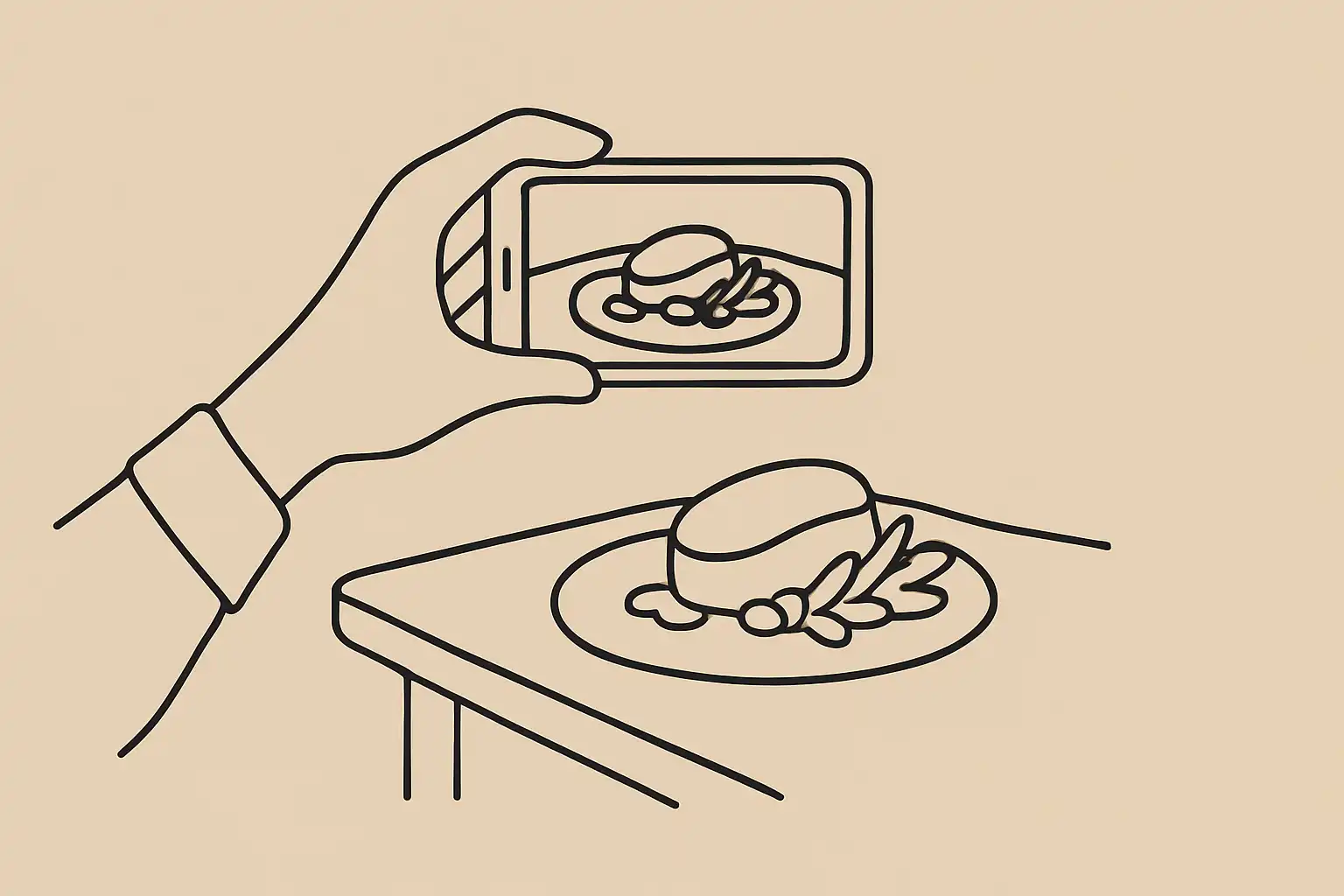
Your social media is your new front window
Seventy-four percent of diners use social media to decide where to eat. Sixty-two percent check your page before they walk through the door. For a 30-seat independent with no marketing team, that means your Instagram grid is doing more work than your sidewalk sign, your Yelp listing, and your website combined.
The good news: you don't need a content calendar, a ring light, or a social media manager. You need a phone, a point of view, and about 20 minutes a day.
Better guest experience. Bigger nights. $299. Once.
Pick two platforms. Ignore the rest.
The single biggest mistake independents make on social media is trying to be everywhere. A half-hearted presence on five platforms is worse than a strong one on two. Every platform you add splits your time and dilutes your content.
Here's where Canadian restaurant discovery actually happens in 2026:
| Platform | Strength | Best for |
|---|---|---|
| Visual discovery, Reels, Stories, Google indexing (since July 2025) | Most restaurants, especially those with strong visual identity | |
| TikTok | Highest engagement (5.53% avg vs 2.35% for Reels), younger discovery | Restaurants targeting 18-34 diners, playful or high-energy concepts |
| Still #1 for discovery at 59% of diners, strong for local community | Neighbourhood restaurants, family dining, 35+ demographic | |
| Google Business Profile | Not social media, but acts like it: photos, posts, reviews | Every restaurant, non-negotiable |
The recommendation for most independents: Instagram as your primary, plus either TikTok or Facebook depending on your crowd. And keep your Google Business Profile active regardless.
If your regulars are mostly 25-45, Instagram and Facebook. If you're pulling a younger, foodie crowd, Instagram and TikTok. If you're doing it alone, Instagram only. One platform done well beats three done poorly.
What to post (and what to skip)
The content that works for restaurants in 2026 is not what most people think. Polished food photography still matters, but it's no longer the main event. Short vertical video and behind-the-scenes content now drive the most engagement and discovery.
A practical content mix for independents:
Food and drink (40% of posts). Close-up plating shots, cocktail pours, dessert reveals. Short video outperforms static images by a wide margin. Fifteen seconds of a dish being finished at the pass will outperform a styled photo every time. Restaurants with strong food visuals see 40% more visits from viewers.
Behind the scenes (25%). Prep work. Staff banter. The 6 AM produce delivery. The chaos before a Friday service. This is the content that builds connection, and 86% of consumers say they trust brands that share user-generated and behind-the-scenes content more than polished marketing. Show the people who make the food. Your dishwasher's playlist. The walk-in fridge at 4 PM on a Saturday. Diners want to see the reality, not the brochure.
Community and UGC (20%). Repost customer photos and videos (with credit). Share tagged Stories. Feature regulars. This does two things: it builds loyalty with the person you're featuring, and it shows potential guests that real people love your place. UGC is more trusted than influencer content by a ratio of roughly 7 to 1.
Promotions and announcements (15%). New menu items. Special events. Holiday hours. Keep this to no more than one in six posts. If every post is a promotion, people tune out.
What to skip entirely: stock photos, generic food quotes, "Happy Monday!" posts with no substance, anything that could come from any restaurant anywhere. If it doesn't say something specific about your place, it's noise.
How often to post (realistically)
The internet will tell you to post daily on every platform. That's advice written by social media agencies, not restaurant operators. Here's what actually works for a small team:
| Platform | Minimum | Sweet spot | Maximum value |
|---|---|---|---|
| Instagram Feed/Reels | 3x/week | 4-5x/week | Daily |
| Instagram Stories | 3x/week | Daily | Multiple daily |
| TikTok | 2x/week | 3-5x/week | Daily |
| 2x/week | 3x/week | 5x/week | |
| Google Business Profile | 1x/week | 2x/week | 3x/week |
Restaurants that post daily grow followers 24% faster than those posting two to three times per week. But the gap between three posts a week and five is much smaller than the gap between zero and three. Consistency matters more than volume.
The 20-minute daily routine:
- Take two or three photos/videos during service (2 minutes)
- Post one piece of content with a real caption (5 minutes)
- Reply to every comment and DM from the last 24 hours (5 minutes)
- Check and repost one tagged Story or UGC (3 minutes)
- Engage with five local accounts: other restaurants, suppliers, neighbourhood businesses (5 minutes)
That last step is the one most restaurants skip, and it's the one that builds your local network fastest. Restaurants that respond to comments see 23% higher engagement. The algorithm rewards accounts that participate in conversations, not just broadcast.
Short video: the highest-return content you can make
Short-form video is the single most important content type for restaurant discovery in 2026. TikTok's average engagement rate of 5.53% is more than double Instagram Reels at 2.35% and nearly triple YouTube Shorts at 1.98%.
You don't need editing skills. You need a phone held vertically and something worth watching.
Five video ideas that take under 60 seconds to shoot:
- A dish being plated from start to finish (speed it up 2x)
- A bartender shaking a cocktail with the sound on
- A first-person walk through your dining room before service
- A staff member explaining their favourite dish in one sentence
- The moment you flip the "Open" sign, panning to the empty room about to fill up
Fifty-five percent of TikTok users say they've visited a restaurant after seeing its food on the platform. Forty percent of people visit a restaurant after seeing food photos online, period. The visual is doing the selling before you ever speak to the guest.
The Google bonus: Since July 2025, Instagram public posts from professional accounts are indexed by Google. That means your Reels and posts can appear in search results. Use your city and neighbourhood in captions. Tag your location. Write real captions with keywords a diner might search. Your Instagram post about "house-made pasta in Kensington Market" can now show up when someone Googles exactly that.
The micro-influencer question
Influencer marketing for restaurants is not what it was three years ago. The data is clear: 49% of diners find new restaurants on social media, but only 8% find them specifically through influencers. Organic discovery, community sharing, and word of mouth still dominate.
That said, local micro-influencers (2,000 to 25,000 followers) are the most cost-effective paid amplification for independents. The numbers:
| Metric | Micro-influencer (2K-25K) | Macro-influencer (100K+) |
|---|---|---|
| Average engagement on food content | 15-20% | 2-5% |
| Typical cost | Free meal or $100-$500 | $1,000-$5,000+ |
| New reservations per post | 10-40 | Harder to measure |
| ROI on food creator campaigns | ~8x average | Variable |
A single post from a well-matched local food creator can drive 10 to 40 new reservations in the week after posting. And the simplest partnership costs nothing beyond your food cost: invite them in, feed them, let them create.
The rules for making it work:
Pick creators who already eat in your neighbourhood, not the ones with the biggest following. Check their comments section: are their followers local? A creator with 3,000 engaged local followers will outperform one with 50,000 scattered across the country.
Don't script the content. Give them the experience and let them tell the story. Authentic content performs better, and creators know their audience better than you do.
One partnership a month is enough. This is not your primary strategy. It's amplification for the organic work you're already doing.
Measuring what matters
Most social media metrics are vanity metrics. Follower count, reach, and impressions feel good but don't tell you if anyone actually walked through your door.
Three numbers that matter for restaurants:
-
Engagement rate. The percentage of people who interact with your content. For restaurants, aim for 2.0-2.5% on Instagram and 3.0-3.5% on TikTok. If you're below that, your content isn't connecting. If you're above it, keep doing what you're doing.
-
Profile visits and link clicks. How many people looked at your profile and tapped your reservation link or directions. This is the closest proxy for "social media brought someone to my door." Track it weekly.
-
Direct messages and tagged content. When people DM you to ask about hours or tag you in their Stories, that's intent. It means they're thinking about visiting or already there. Respond to every single one.
Restaurants with a deliberate social media strategy saw a 9.9% average revenue increase from social channels. Social-first restaurants, those treating social as a core business function, saw 14.1%. For a restaurant doing $700,000 a year, that's $69,000 to $99,000 in additional revenue.
You don't need sophisticated tracking to see this. Watch your reservations the week after a post goes viral. Ask new customers how they found you. Check your Google Business Profile insights alongside your social metrics. The patterns will be obvious.
The platform you're probably ignoring
Your Google Business Profile isn't technically social media, but it behaves like one. You can post updates, share photos, respond to reviews, and it directly influences how you show up in local search and AI recommendations.
Restaurants with optimized Google profiles get 42% more direction requests and 520% more calls when they have 100+ photos. A weekly Google Business Profile post takes five minutes and keeps your listing active in local search.
If you're only going to do one thing after reading this article, make it this: post a photo to your Google Business Profile every week. It's the lowest-effort, highest-impact action on this entire list.
Sources: Cropink, Toast, Dash Social, Previsible, ION Hospitality, Restaurant Velocity.
Frequently Asked Questions
Which social media platform is best for restaurants in 2026?
Instagram is the strongest starting point for most independent restaurants, combining visual discovery, Reels, Stories, and Google search indexing since July 2025. Add TikTok if you're targeting diners under 35, or Facebook if your crowd is 35 and older. Focus on one or two platforms rather than spreading thin.
How often should a restaurant post on social media?
Three to five posts per week on your primary platform is the sweet spot for independents. Daily Stories on Instagram help visibility. Consistency matters more than volume: the gap between zero posts and three is much larger than the gap between three and five. Budget about 20 minutes a day.
What type of content works best for restaurant social media?
Short vertical video of food preparation, plating, and behind-the-scenes moments drives the most engagement and discovery. A practical split: 40% food and drink content, 25% behind-the-scenes, 20% community and user-generated content, and 15% promotions. Authenticity outperforms polish.
Are micro-influencers worth it for independent restaurants?
Local micro-influencers with 2,000 to 25,000 followers are the most cost-effective paid option. A single post from a local food creator can drive 10 to 40 new reservations, often for just the cost of a meal. Pick creators whose followers are in your neighbourhood, not the ones with the biggest number.
Does restaurant social media actually drive revenue?
Restaurants with a deliberate social media strategy saw a 9.9% average revenue increase from social channels. For a restaurant doing $700,000 a year, that translates to roughly $69,000 in additional revenue. The key is consistency and engagement, not follower count.