QR Code Menus: Pros, Cons, and What Works
Most of the articles you'll find about QR code menus were written by companies that sell QR code menu software. That matters, because the story they tell is predictable: QR menus save money, boost order values, and modernize your operation. Some of that is true. But the full picture, drawn from independent research rather than vendor marketing, looks different.
For a 30-seat independent in Toronto or Calgary, the question isn't whether QR menus are good or bad. It's which parts of your menu experience belong on a phone screen and which belong on paper.
What QR menus actually save you
The cost argument is real. Restaurants tracked by EasyMenus across 10,000+ locations spend an average of $3,847 per year on menu printing. Switch to digital and that number drops to nearly zero.
But printing costs tell only part of the story. Digital menus also let you update prices, add specials, and remove sold-out items in real time. Restaurants using digital menus update them 4.2 times more frequently than those using print, and that consistency cuts menu-related complaints (wrong prices, unavailable items, allergen confusion) by 57%.
| Cost factor | Print menu | QR menu |
|---|---|---|
| Annual printing | ~$3,800 CAD | $0-$200 (platform fee) |
| Update speed | Days to weeks | Minutes |
| Menu-related complaints | Baseline | 57% lower |
| Update frequency | ~1x per quarter | 4.2x more often |
For a spot that changes its menu frequently, runs daily specials, or rotates seasonal items, the operational case for digital is strong.
Better guest experience. Bigger nights. $299. Once.
What the guest data actually says
Here's where the vendor pitch falls apart.
Toast surveyed 850 adults in September 2024 and found that 81% prefer a physical menu. Only 1% chose QR codes as their preferred format. Among diners 55 and older, 90% prefer traditional menus.
The complaints are specific. The top frustration, cited by 26% of respondents, is that text on a phone screen is too small to read comfortably. Another 20% said they're frustrated at having to use their phone at all during a meal. And 20% said flatly that there's nothing they like about QR code menus.
That 1% preference number is striking. It means the overwhelming majority of your guests would rather hold something in their hands than scroll on their phones. Even among diners aged 25 to 34, the most tech-comfortable group, only 11% preferred a digital option (and most of those chose tablets provided by the restaurant, not their own phones).
The hidden cost: missed orders
QSR Magazine reported on a pattern that any operator who's watched a table struggle with a QR menu will recognize. When guests scroll through a digital menu, they tend to find what they were already planning to order and stop looking. Entire sections get missed. Appetizers, desserts, drinks, specials: the items that grow your average cheque often live in the parts of the menu that people never scroll to.
A study published in the Journal of Hospitality and Tourism Management (December 2024) confirmed the pattern. QR code menus reduce customer loyalty by increasing perceptions of inconvenience, particularly among guests who value the social side of dining out. The effect is strongest among people with a high need for interaction, which describes most of the guests at a neighbourhood independent.
The vendor claim that QR menus boost average order values by 20 to 30% deserves scrutiny. That data comes almost exclusively from companies selling QR ordering platforms, where the comparison is often between a full digital ordering system (with built-in upsell prompts and suggested add-ons) and a basic paper menu with no server interaction. It's not an apples-to-apples comparison for a 40-seat bistro where the server recommends the wine.
The Canadian context
Canada sits among the top countries for QR code adoption globally. A Dalhousie University survey found that three out of five Canadians had used QR codes at restaurants or grocery stores by August 2021. That number has only grown since.
But adoption doesn't equal preference. The Walrus published a piece capturing what many Canadian diners feel: QR menus pull you out of the shared moment at the table and into your phone. The writer described squinting at a smudgy screen at an otherwise lovely restaurant, an experience that felt at odds with the care the venue had put into everything else.
Canadian independents face an added wrinkle that chain restaurants don't: your menu IS your personality. A printed menu that reflects your identity, your food philosophy, your design sense, that's a brand touchpoint. A QR code that loads a mobile website is generic by comparison. For an independent competing on atmosphere and character, that matters.
The hybrid approach: what the data supports
The clearest finding across all the research points to a single answer: use both.
A hybrid approach (QR codes on tables with physical menus available by default) achieved 92% customer satisfaction in one tracked study. QR-only scored 87%. Print-only scored 89%. The gap isn't huge, but 92% is the best option and it lets you capture benefits from both formats.
Here's what works in practice for most independents:
Keep physical menus for the core experience. Your food menu, your drinks list, the things that define the meal. Let guests browse without needing their phones.
Use QR codes where they add real value. Wine lists that change weekly. Daily specials. Allergen and dietary detail that would clutter a printed menu. A link to your story or Instagram. Anything that benefits from being updateable or deeper than the main menu needs to be.
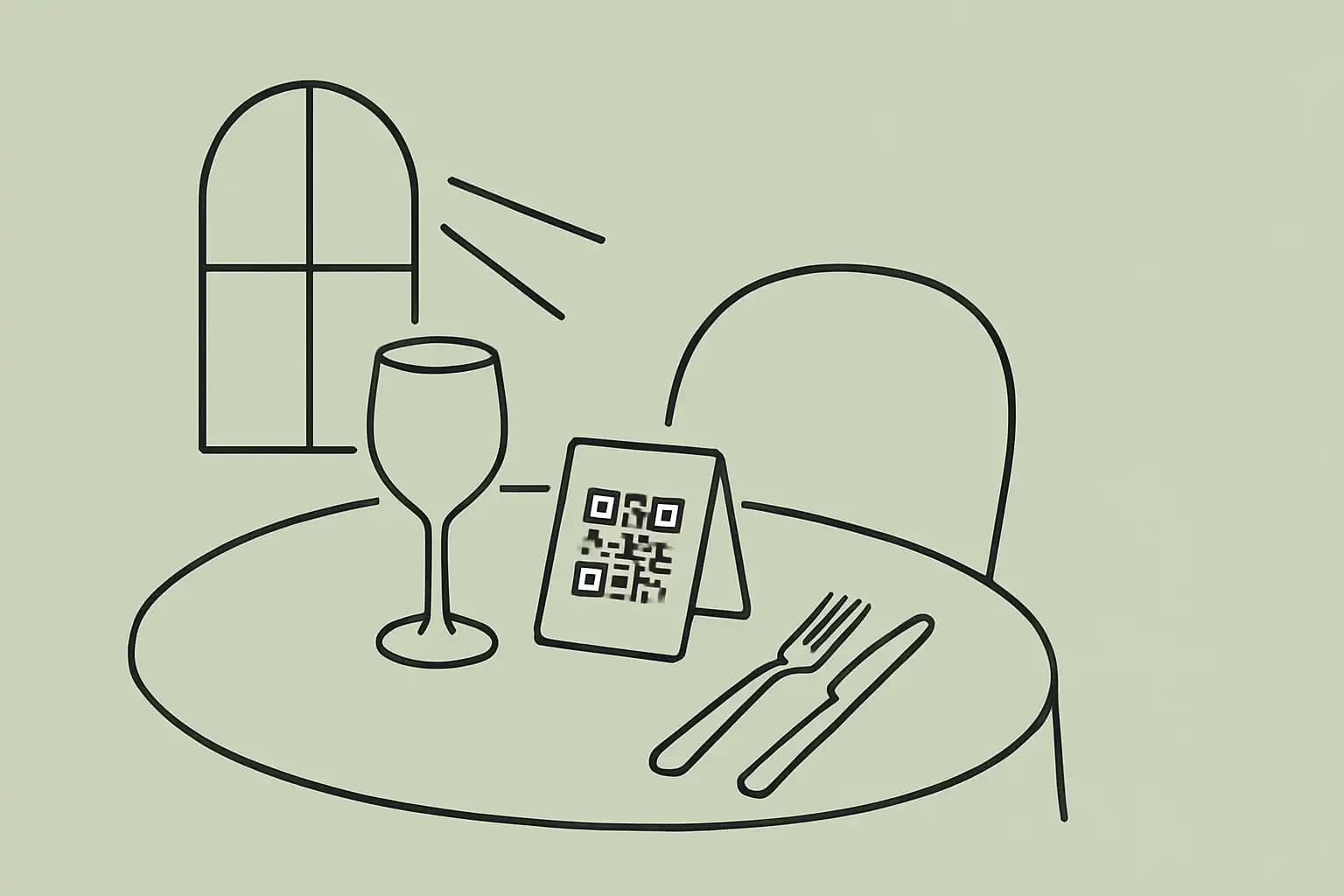
Make QR codes findable but not forced. A table tent or small sign that says "Scan for today's specials and wine list" works. Replacing the menu entirely with a QR code coaster that nobody notices does not. Signage that explains the purpose achieves a 73% scan rate. A QR code with no context gets 34%.
Keep a few extra physical menus behind the bar. For the guest whose phone is dead, the couple who left their reading glasses at home, the table that just wants to point at something and say "that one."
When QR-only might make sense
There are exceptions. A fast-casual counter-service spot with a rotating board, a food truck, a pop-up: these are situations where the format fits. The overhead is minimal, the interaction is brief, and the expectation is casual.
If your concept is high-turnover and your menu changes daily, a QR-only approach can work. But even then, a large-format printed board or display near the counter solves the same problem without requiring a phone.
The real question
The QR menu debate gets framed as a technology decision, but it's a hospitality decision. You're choosing what the first moment of your guest's meal feels like. Is it reaching for their phone, waiting for a page to load, and squinting at a small screen? Or is it holding something in their hands and starting to imagine the evening ahead?
For most Canadian independents, the best answer is both: physical menus that set the tone, supported by QR codes that handle the rest. You save most of the printing cost, you keep the guest experience you've worked to build, and nobody has to scroll past your appetizer section to find the drinks.
Sources: Toast QR Code Menu Survey, QSR Magazine, The Walrus, EasyMenus, TableQR.
Frequently Asked Questions
Do QR code menus save restaurants money?
Yes. Independent restaurants spend roughly $3,800 CAD per year on menu printing. QR menus reduce that to near-zero, plus you can update prices and specials instantly instead of waiting for a reprint.
Do customers prefer QR code menus or physical menus?
Physical menus, overwhelmingly. A Toast survey of 850 adults found 81% prefer a physical menu. Only 1% chose QR codes. The preference for print is strongest among diners 55 and older (90%).
What is the best menu approach for independent restaurants?
A hybrid approach scores highest in customer satisfaction (92%). Keep printed menus as the default for your core food and drink offering, and use QR codes for specials, wine lists, allergen information, and anything that changes frequently.
Do QR code menus increase average order value?
Vendor claims suggest 20-30% higher order values, but that data comes from companies selling QR platforms and often compares full digital ordering systems with upsell prompts against basic paper menus. Independent research shows QR menus can lead guests to miss entire menu sections, reducing what they order.
How do I get more guests to scan my QR code?
Clear signage explaining what the QR code leads to achieves a 73% scan rate. A QR code with no explanation gets only 34%. Labelling it "Scan for today's specials" works far better than a plain QR code on a coaster.