Buying an Existing Restaurant in Canada: What Transfers
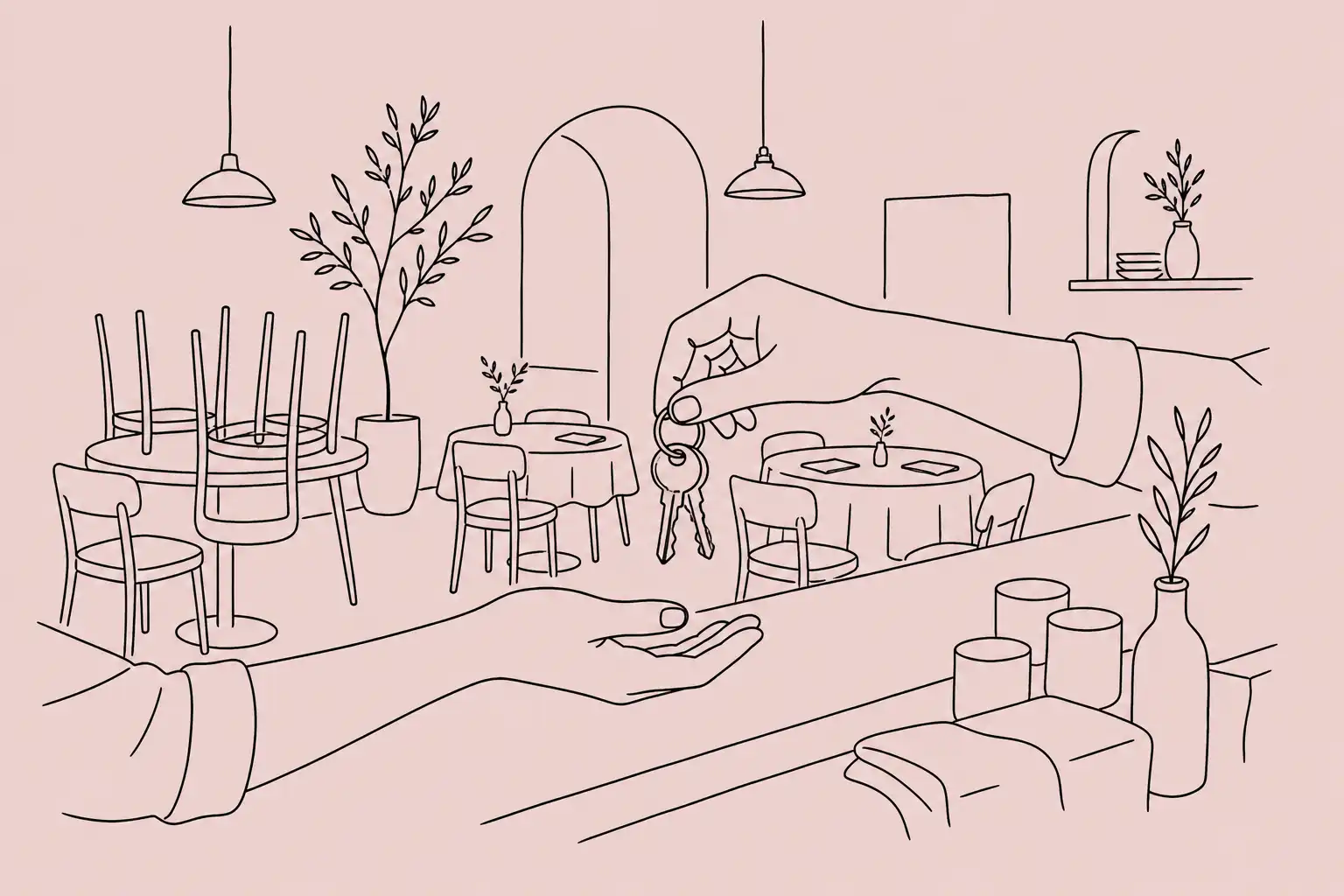
When you buy an existing restaurant in Canada, the stoves and the walk-in come with the keys. Almost nothing else transfers on its own. The liquor licence has to be transferred or reapplied for, the lease needs the landlord's signature, the staff you keep bring their years of service with them, and the guest list comes with strings attached.
None of that is a reason not to buy. Taking over a working room can cut $75,000 to $150,000 off a build-out, as we showed in our startup cost breakdown. And a lot of rooms are on the market right now: 67% of operators told Restaurants Canada this fall that profitability is down. Some of those owners are going to sell rather than close.
But here's the thing most listings won't tell you. You're not really buying the equipment. You're buying the lease, the licence and the regulars. Those are the three things that don't come automatically.
What actually transfers when you buy a restaurant?
Here's the short version for a typical asset purchase (more on that term below).
| Item | Comes with the sale? | What you actually have to do |
|---|---|---|
| Kitchen equipment, furniture, smallwares | Yes, if listed in the agreement | Inspect it and list every piece in the purchase agreement |
| Liquor licence | No | Transfer (Ontario, BC) or new permit (Quebec) |
| Lease | Only with the landlord's consent | Get written consent as a condition of closing |
| Health permit, city business licence | Usually not | Apply in your own name, notify public health |
| Staff | Their service history does | Budget for accrued vacation and future termination notice |
| GST/HST on the assets | Can be avoided | File the GST44 election with the seller |
| Guest list and reservation history | Yes, with conditions | Use it for the same purposes and tell guests the business changed hands |
| POS, reservation and delivery accounts | Rarely | Export the data before closing, sign your own contracts |

Reservation software. Free for Canadian restaurants. $0 a month
Are you buying the assets or the company?
This one decision changes everything below it, so settle it with your lawyer and accountant first.
Asset purchase. You buy specific things: equipment, the name, the recipes, the goodwill. You start a new company, and the seller's company keeps its own debts. This is what most small restaurant deals look like. The catch is that every licence, permit and contract has to move over one by one.
Share purchase. You buy the company itself. The licences, the lease and the employees stay put, because the owner on paper hasn't changed. But you also inherit everything the company did before you: unpaid source deductions, an old supplier dispute, a lawsuit from a slip on the patio in 2024. Even here, regulators may want to hear about it. In Ontario, someone acquiring 10% or more of a licensee's shares counts as a change of ownership that needs an AGCO transfer.
Our view: for a single independent room, an asset purchase is almost always the safer buy. Extra paperwork is cheaper than a liability you didn't know about.
If you go the asset route, ask about the GST44 election. When you acquire all or substantially all of what's needed to run the business, you and the seller can jointly elect so that no GST/HST is charged on the sale. On $180,000 of assets in Ontario, that's $23,400 in HST you don't have to front and claim back. It doesn't work if you're only buying a few pieces of equipment, and the CRA says the buyer must file it by the due date of the first return where the tax would have been owed.
Can you take over the existing liquor licence?
Depends on the province. This is where timelines blow up, so start here.
Ontario. The licence has to be transferred through the AGCO to the new owner. The transfer fee is $1,000. If you want to keep serving between closing and approval, you apply for an Authorization to Contract Out with the transfer, and you can't sell a drink until it arrives. Two traps: the transfer can't go ahead if the seller (or you) owes the Ministry of Finance under the Retail Sales Tax or Liquor Tax Acts, and it usually won't be approved if the seller has an unpaid monetary penalty. Check the licence's expiry date too. If it lapses mid-transfer, you're starting over.
British Columbia. The seller starts the transfer in the LCRB portal by entering your business name and email. You then file the application, which costs $330 and needs a CRA business number in the new owner's name. The room can stay open during the transfer. The seller stays responsible for the licence until the LCRB says the application is administratively complete, and then you become the deemed licensee. An expired licence can't be transferred at all.
Quebec. No transfer. After a sale, the buyer files a new permit application with the RACJ, and the RACJ's own average for a restaurant permit is 90 days. You can also ask for a temporary operating authorization so you can keep serving while the application is processed. Ask for it at the same time, not after closing.
Whatever the province, put "liquor licence transferred or temporary authorization granted" in the purchase agreement as a condition. A restaurant that loses its bar for three months is not the restaurant you priced.
Will the landlord let you take over the lease?
The lease is often the most valuable thing in the deal. A five-year lease at $24 a square foot on a street now going for $40 is worth more than the combi oven.
Most commercial leases need the landlord's written consent before they can be assigned. In Ontario, the Commercial Tenancies Act says a landlord can't refuse consent unreasonably unless the lease says otherwise, and plenty of leases do say otherwise. Courts have found it reasonable to withhold consent until a default is cured, so ask whether the seller is behind on rent before you get attached.
Expect the landlord to want something from you: financials, a rent deposit, or a personal guarantee. Read three things before you sign anything:
- The remaining term and renewal options. Two years left with no renewal is not a business, it's a countdown.
- The use clause. If it says "café" and you plan to run a bar, you need that changed.
- What the seller still owes. Some assignment clauses keep the original tenant on the hook, and the landlord may hold them to it. That's the seller's problem, until it slows down the consent.
Make written landlord consent a condition of closing. No consent, no deal.
What happens to the staff you inherit?
You can't buy the restaurant and wipe out the team's history. Every province has successor rules, and they work in the staff's favour.
In Ontario, if you hire the seller's employees, the Employment Standards Act (section 9) treats their employment as continuous. Their years with the old owner count toward vacation entitlement and termination notice with you. The main exception is a gap of more than 13 weeks before you rehire them. And the Ontario Court of Appeal has confirmed a buyer can't contract out of that prior service.
British Columbia's Employment Standards Act (section 97) deems employment continuous through a sale of the business. In Quebec, section 97 of the Act respecting labour standards and article 2097 of the Civil Code go further: selling the business doesn't end the employment contract at all, and the contract binds the new owner. A private deal between buyer and seller can't get around it.
What that means in dollars: a line cook with eight years at the place brings eight years of service. If you let them go in month three, you owe notice based on eight years, not three months. So before closing, get a list of every employee with start date, wage, accrued vacation pay and banked hours, and have the purchase price adjusted for what's owed up to the closing date. We broke down what each employee really costs if you want to run the numbers.
Do the health permit and the city licence come with the room?
Usually not. They're generally issued to the operator, not the address.
In Quebec, the MAPAQ food permit is in the operator's name, so a new owner applies for their own. In Ontario there's no provincial food permit, but your local public health unit inspects the premises and needs to know who's running it, and cities like Toronto license the business operator. Other provinces work the same way through their health authority. Call the health unit and the city licensing office the week you sign the offer, not the week you close.
While you're on the phone, ask for the last inspection reports. They're the cheapest due diligence you'll ever do. A history of fridge temperature notes and pest findings tells you more about the kitchen than the listing photos.
Don't forget insurance. The seller's policy doesn't follow the business, and you need coverage in your own name from the day you take the keys.
Who owns the guest list and reservation history?
This is the part almost nobody prices in, and it might be worth more than the equipment.
Federal privacy law has a specific rule for this. Under section 7.2 of PIPEDA, the seller can share personal information with you during the deal only if it's needed to decide whether to buy, and only under a written agreement limiting how you use it. If the deal falls through, you return or destroy it. After closing, you can keep using the guest list if you need it to run the business, for the same purposes it was collected for, and you have to tell guests within a reasonable time that the business changed hands. Quebec's private-sector privacy law has a similar rule for commercial transactions. We cover the wider rules in our guide to customer data and privacy law.
The practical problem is often not the law. It's that the data sits in the seller's software accounts. Reservation history, guest notes ("allergic to shellfish," "always table 6"), and the email list live in a reservation system, a POS or a newsletter tool under the seller's contract. Many of those contracts can't be assigned. So:
- List every system the restaurant uses and who holds the account.
- Get exports of guest data and booking history before closing, written into the agreement.
- Check the seller's POS contract for early-termination fees or hardware balances. Those are the seller's to settle.
- Send the "new owners, same kitchen" email in your first week. It's both the legal notice and your best marketing.
What should you check before you sign?
One reader on r/restaurateur put it bluntly: "If you do it correctly you buy yourself a decent job." That's a good test. Buy the restaurant you can run, at a price the real numbers support.
- Three years of financials and the sales tax returns. If the POS reports and the HST filings don't match, ask why.
- The lease, with written landlord consent as a closing condition.
- The liquor licence status, its expiry date, and any unpaid penalties.
- An employee list with start dates, wages, accrued vacation and banked hours.
- The last health inspection reports.
- A list of every software and supplier contract, and which ones you're expected to take over.
- A guest data export and the privacy terms written into the agreement.
- Gift cards still out there. Guests will show up with cards the seller sold. Decide who honours them and take the value off the price.
- An equipment inspection by a refrigeration tech, not a walk-through with the seller.
Then have a lawyer and an accountant who've done restaurant deals review it. This is the same advice we give in our guide to opening a restaurant in Canada: the paperwork runs in parallel, and it never moves as fast as you'd like.
When you're ready to take reservations, Trudy's Table is built for Canadian independents.
Sources: AGCO, Transferring a liquor sales licence, AGCO, Liquor licensing fees, Government of BC, Transfer a liquor licence, RACJ, Permis de restaurant, CRA, GST44, CRA, Sale of a business (GST/HST Memorandum 14.4), PIPEDA section 7.2, Ontario Employment Standards Act, McMillan, Civil Code of Quebec, art. 2097, Cantech Letter / Restaurants Canada.
Frequently Asked Questions
What transfers when you buy an existing restaurant in Canada?
In a typical asset purchase, the equipment, furniture, name and goodwill listed in the agreement come with the sale. The liquor licence, lease, health permit, city licence and software accounts don't move on their own. Each needs a transfer, consent or new application, and staff bring their years of service with them.
Can I take over the liquor licence when I buy a restaurant?
In Ontario, the AGCO transfers the licence for a $1,000 fee, and an Authorization to Contract Out lets you operate in the meantime. In BC, the seller starts a $330 transfer in the LCRB portal and the room can stay open. In Quebec, the buyer applies for a new RACJ permit (about 90 days) and can ask for a temporary operating authorization.
Do I need the landlord's permission to take over a restaurant lease?
Almost always. Most commercial leases require written landlord consent to an assignment. In Ontario, consent can't be unreasonably withheld unless the lease says so, but a landlord can reasonably wait until a default is cured. Expect to provide financials, a deposit or a personal guarantee, and make consent a closing condition.
What happens to employees when a restaurant is sold?
If the buyer keeps them, their employment is treated as continuous under provincial employment standards, so prior years count toward vacation and termination notice. Ontario breaks continuity only after a gap of more than 13 weeks. In Quebec, the sale doesn't end the employment contract at all and binds the new owner.
Can I use the previous owner's customer list after buying a restaurant?
Yes, under PIPEDA's business transaction rule, if you need it to run the business, you use it for the same purposes it was collected for, and you notify guests within a reasonable time that the business was sold. During due diligence, sharing requires a written agreement limiting use.