Adam Donnelly & Courtney Molaro (Petit Socco): Smaller on Purpose
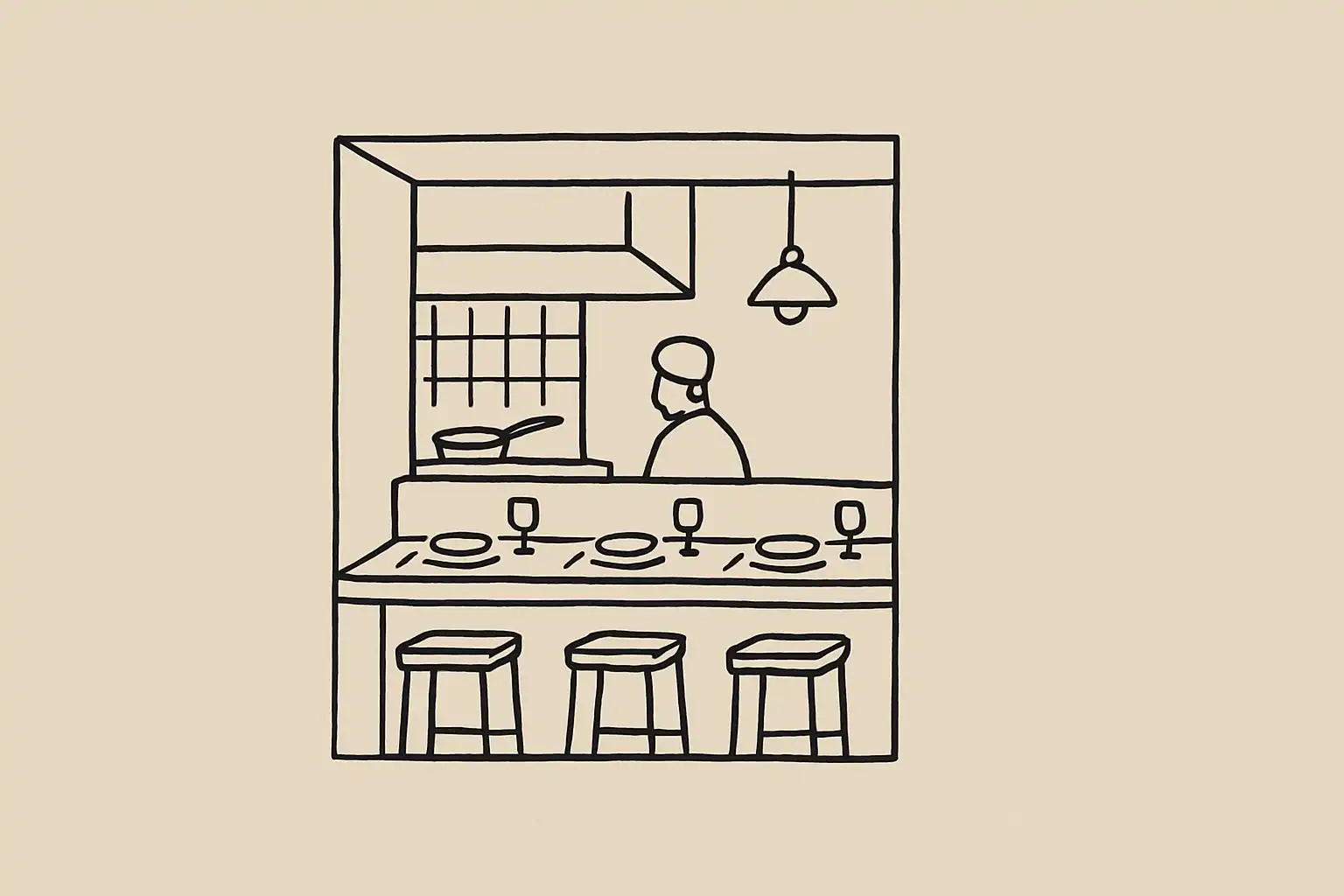
Twelve seats. Two people. A new menu every Wednesday. That is the entire operation at Petit Socco, a restaurant on Stafford Street in Winnipeg's Crescentwood neighbourhood that earned fifth place on Air Canada enRoute's Best New Restaurants 2023 list. Chef Adam Donnelly cooks. His partner, Courtney Molaro, runs the room, pours the wine, designed the tiles behind the open kitchen, and hung the Picasso prints on the walls. There is no other staff.
Three years earlier, Donnelly had closed Segovia, the 42-seat Spanish tapas bar he co-owned with Carolina Konrad in Osborne Village. Segovia had been running for over a decade. It sat on Canada's 100 Best Restaurants list, made Maclean's Top 50, and was the kind of place other chefs pointed to when they talked about Winnipeg's food scene. Then the pandemic arrived, and Donnelly decided he would rather close than operate a diluted version of what he and his team had built.
The Long Route to a Short Menu
Donnelly graduated from Red River College's culinary arts program in 2005 and spent the next several years circling the globe. He cooked at Amici in Winnipeg, then kitchens in Melbourne. He crossed to London to work under Michelin-starred chef Tom Aikens, staged for Fergus Henderson at St. John Bread and Wine (one of the world's defining nose-to-tail restaurants), and landed at Dehesa Charcuterie and Tapas Bar, the spot that would eventually shape Segovia's identity. A six-month tour through Spain filled in the rest.
All of that training, a decade of running a 42-seat dining room, awards, national recognition, and the outcome was a deliberate retreat to the smallest possible version of a restaurant. Not because things fell apart. Because he figured out what he actually wanted.
Better guest experience. Bigger nights. $299. Once.
Closing as a Decision, Not a Defeat
Segovia's closure in May 2020 was not a slow decline. The restaurant was one of Winnipeg's most acclaimed when the doors shut. Donnelly told media he did not want to run a watered-down version of the concept. That is a sentence most people skim past, but it is worth sitting with. He had a restaurant people loved, a reputation that could have carried a pivot to takeout or a reduced menu, and he chose to walk away entirely, absorbing everything that closing a Canadian restaurant costs rather than dilute the thing.
What followed was not a grand comeback plan. He stepped out of professional kitchens, started a sourdough bread company, and supplied places like deer + almond. For two years, he baked. Then in late June 2022, he and Molaro took over the former home of Close Company on Stafford Street and opened Petit Socco by August.
Constraint as the Whole Point
Petit Socco is named after a district in Tangier, Morocco, inspired by a trip Donnelly and Molaro made through France and Spain in 2019. The menu shifts completely every week: four courses, $85 per guest, two seatings per night, Wednesday through Friday. Reservations fill weeks in advance, which also means a single no-show takes a real bite out of the night when the room holds ten.
The smallness is not a limitation they work around. It is the operating principle. A kitchen that size means no walk-in cooler, which means daily sourcing, which means the menu responds to what is available that morning. Donnelly has said he did not want to be in a slick, spacious kitchen with all the bells and whistles anymore. A small space forces you to cook only with the highest quality, most seasonal ingredients.
The two-person model eliminates every staffing problem that dominates the industry right now. No hiring crisis. No scheduling software. No team management. Molaro handles the entire front of house, from greeting guests to pouring wine to designing the space itself. Donnelly cooks everything. The overhead is minimal. The intimacy is the product. Most operators can only get partway there, running leaner without running themselves into the ground.
What a 10-Seat Restaurant Teaches
The pattern here is not "go small." Plenty of people open small restaurants because that is what they can afford. Donnelly opened small after proving he could run big. He had the resume, the recognition, and the network to open another 40-seat concept. He chose 10 seats because 10 seats let him cook the way he wanted to cook and live the way he wanted to live.
There is a version of restaurant ambition that only counts upward: more seats, more locations, more revenue. Petit Socco is a counterargument. The enRoute judges did not rank it fifth because it was small. They ranked it fifth because the food was extraordinary, and Donnelly won Dish of the Year for his pork belly and nectarine panzanella. The constraint did not produce good-enough work. It produced the best work of his career.
For any independent operator doing the math on expansion, or wondering whether bigger is the only path forward, Petit Socco is worth studying. Sometimes the answer to "what should my restaurant look like?" is smaller, tighter, and completely yours.
Sources: Eat North, Peg City Grub / Tourism Winnipeg, CBC News, ChrisD.ca, RRC Polytech Alumni.