How to Get More Google Reviews for Your Restaurant
A one-star increase on Google translates to a 5 to 9% revenue bump for independent restaurants, according to a Harvard study that looked specifically at independents, not chains. That same star means nothing if nobody sees your profile. And right now, 92% of diners check reviews before choosing where to eat.
So the question isn't whether reviews matter. It's why most independents have 30 reviews from two years ago while the chain down the street has 400.
The answer isn't that their food is better. It's that they have a system.
Why review count matters less than you think
Here's something most review guides won't tell you: total count is overrated. Review recency is one of the most underrated local ranking factors, according to Whitespark's 2026 Local Search Ranking Factors report. A restaurant with 50 reviews from the past three months will outrank a competitor with 2,000 reviews that stopped coming in six months ago.
Google treats fresh reviews as a signal that your business is active and relevant. For a new independent, this is the best news possible. You don't need to catch up to 2,000 reviews. You need 10 to 15 per month, consistently.
| Review profile | Likely local pack result |
|---|---|
| 2,000 reviews, none in 60 days | Dropping in rankings |
| 50 reviews, 15 new per month | Rising in rankings |
| 200 reviews, steady 10-15/month | Dominant position |
Reviews also account for roughly 20% of local pack ranking factors overall. That's Google Maps, the "restaurants near me" results, the box that shows up before any website link. For a neighbourhood restaurant, the local pack is where 80% of your discovery happens.
Better guest experience. Bigger nights. $299. Once.
The two-minute setup you're probably skipping
Before you ask anyone for a review, set up your direct review link. Google makes this surprisingly easy, but most operators don't know it exists.
- Go to your Google Business Profile
- Click "Read reviews," then "Get more reviews"
- Copy the short link Google generates
- Use a free QR code generator (Google's own, or QR Code Generator) to turn that link into a scannable code
That's it. This link skips straight to the review form. No searching for your restaurant, no navigating menus. The guest taps or scans and they're writing.
Restaurants using QR codes see 3 to 5 times more reviews compared to verbal requests alone. The reason is friction. Every extra tap between "I should leave a review" and actually writing one costs you about half your potential reviewers.
Print the QR code on:
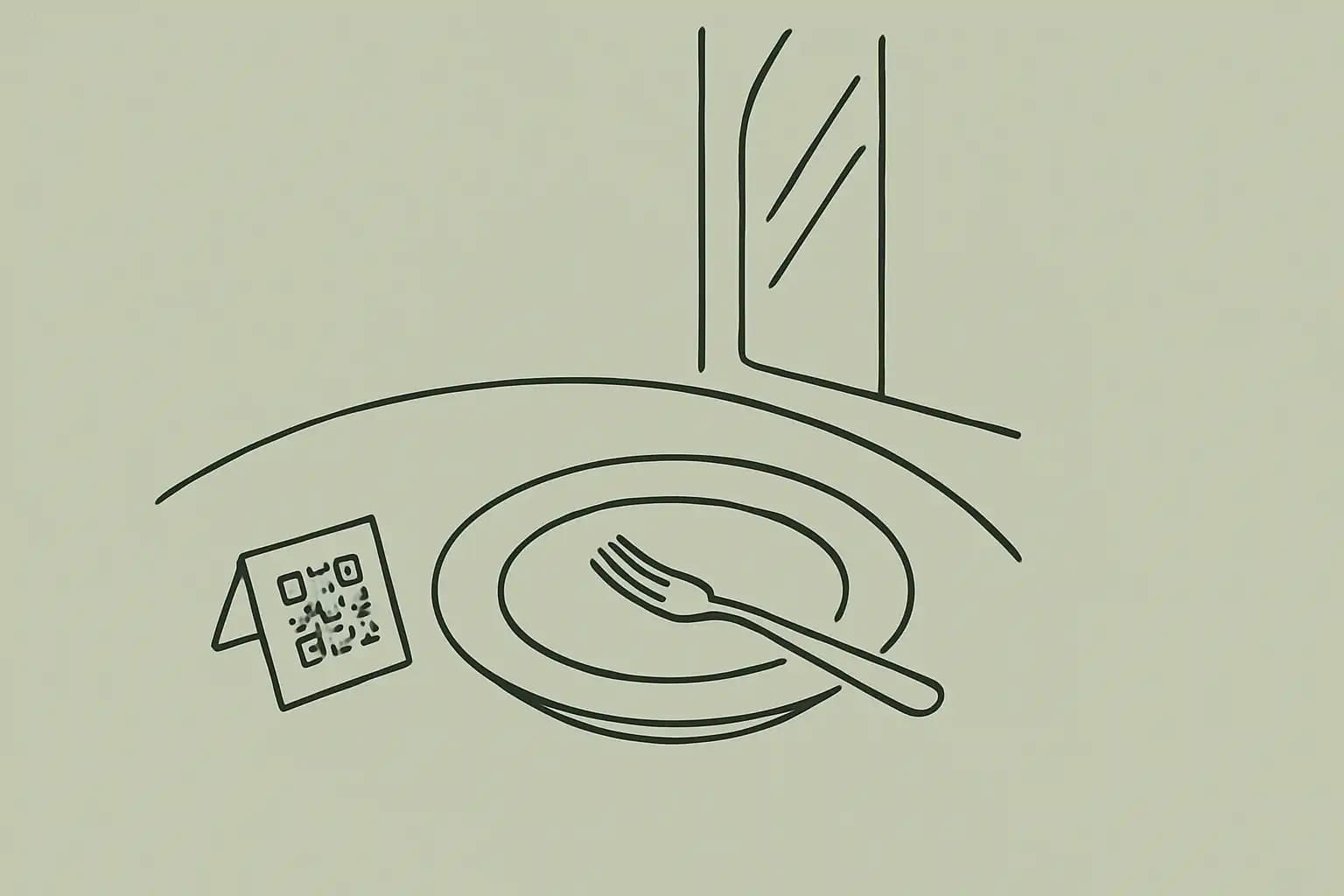
- A small table card (not a poster, a card)
- The bottom of your receipt
- A sticker near the door on the way out
- Takeout bags and containers
When to ask: the 90-second window
Timing is the whole game. There's a window between the moment a guest feels great about their meal and the moment they walk out the door and forget. It's about 90 seconds.
Ask too early (while they're eating) and it feels transactional. Ask too late (a follow-up email the next day) and the feeling has faded. The sweet spot is during the check presentation or the goodbye.
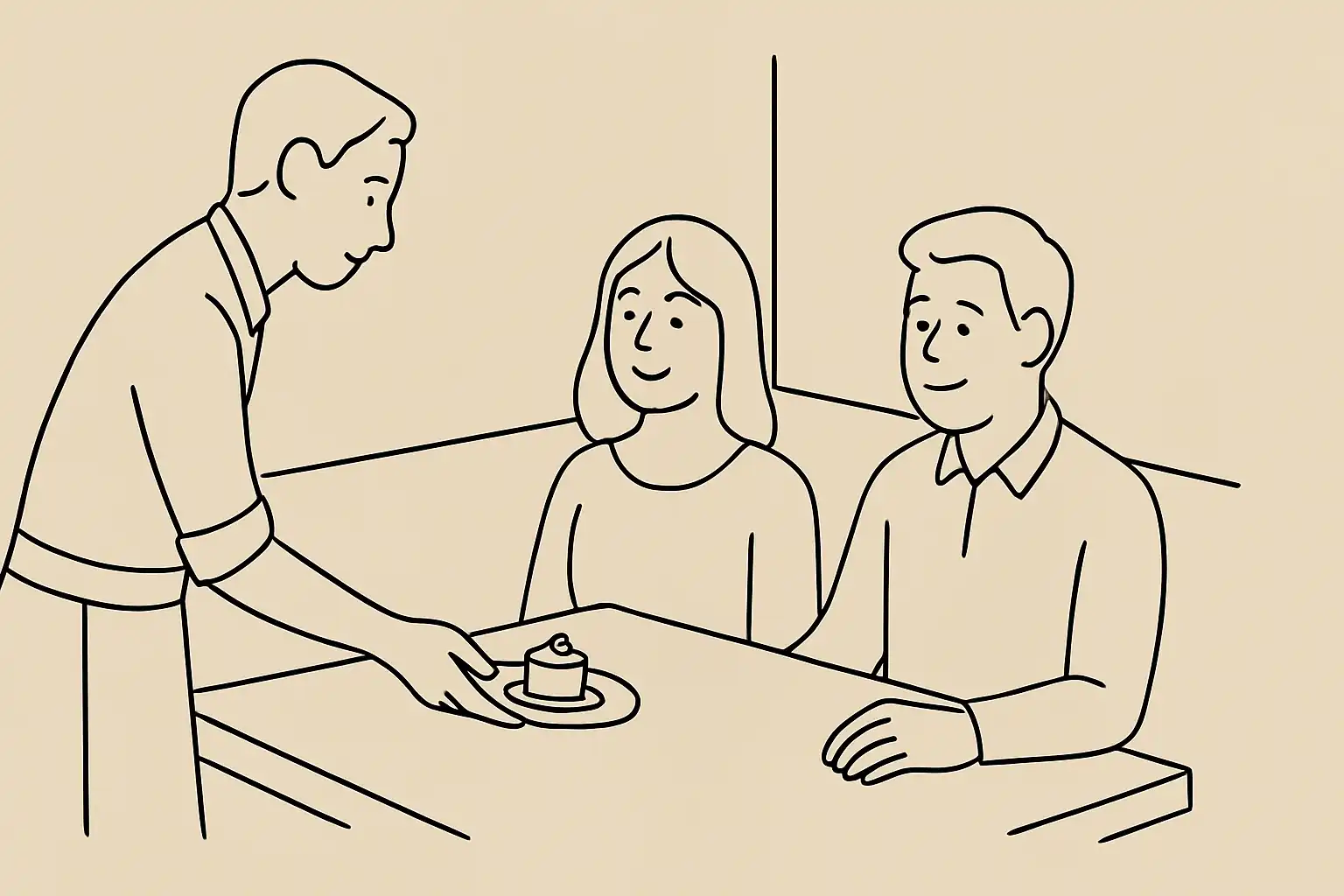
The best person to ask isn't the manager doing a table touch. It's the server who just delivered a great experience. They've built rapport. Their ask carries more weight.
Here's what works, ranked by conversion:
| Method | Conversion rate | Best for |
|---|---|---|
| Server mentions it while dropping the bill | Highest | Regulars, happy tables |
| QR code on table card (guest finds it themselves) | High | Every table, no staff effort |
| QR code on receipt | Medium | Takeout, delivery |
| Follow-up text or email (same day) | Lower | If you collect contact info |
| Social media ask ("Leave us a review!") | Lowest | Brand awareness, not reviews |
Five ways to ask without being awkward
The biggest barrier to review generation isn't technology. It's that asking feels weird. Here are five approaches that work for independents without sounding desperate.
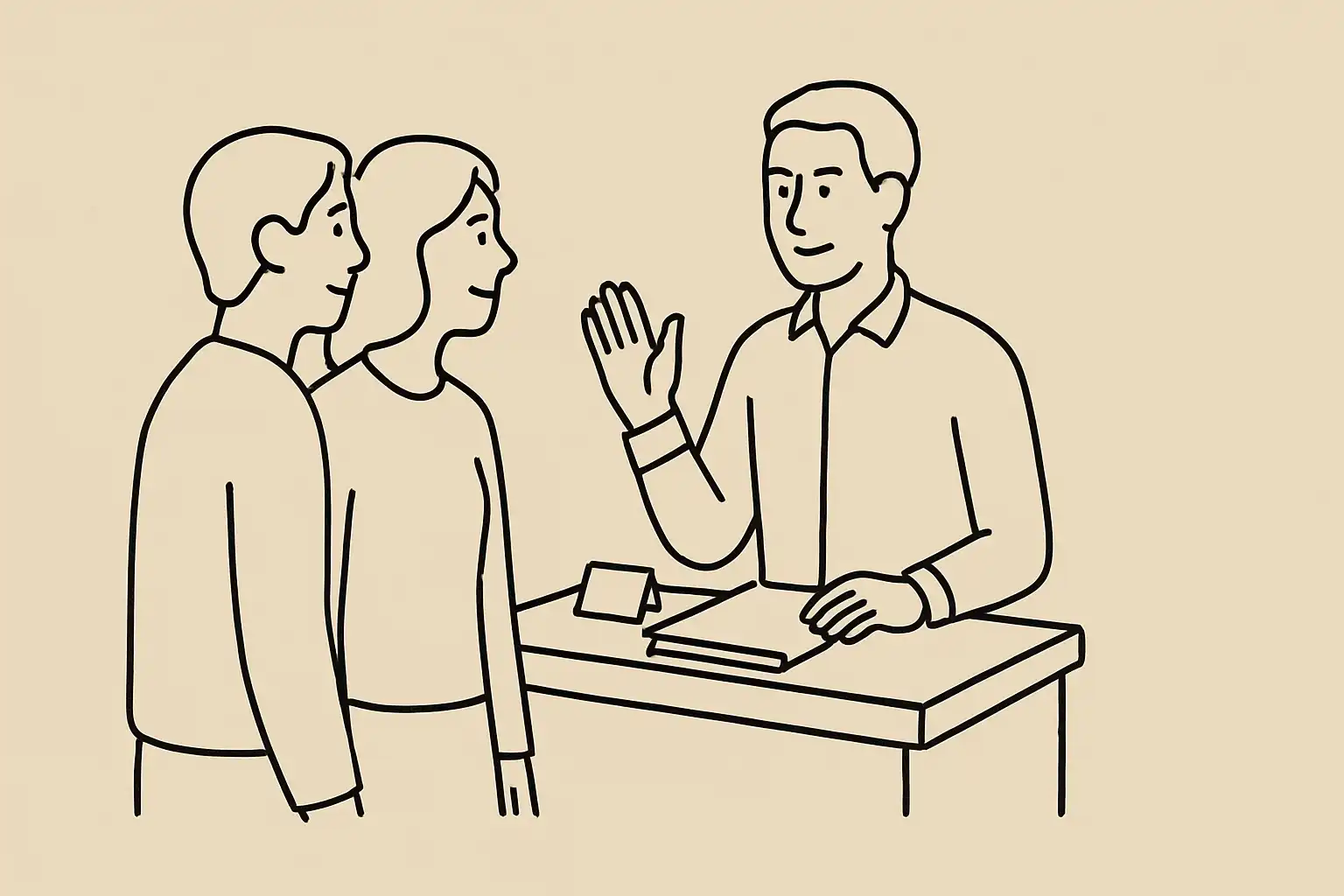
1. The genuine compliment redirect. When a guest says "That was amazing," your server says: "That means a lot. If you have a second, we'd love it if you left us a Google review. It really helps people find us." Then gesture to the table card or hand them a receipt with the QR code.
2. The silent table card. A small card on the table that says something like: "Loved your meal? Tell Google about it." Plus the QR code. No staff effort required. Works every service.
3. The thank-you text. If you collect phone numbers through your reservation system, send a text within two hours of the meal: "Thanks for dining with us tonight. If you enjoyed it, a Google review helps other diners find us: [link]." Keep it one message. No follow-ups. And make sure you have consent under CASL, Canada's anti-spam law, which requires express consent before sending commercial electronic messages. Fines run up to $10 million per violation, so if you're not sure whether you have consent, don't send the text.
4. The checkout moment. For counter-service or takeout, a small sign at the till: "How was everything? Scan to let us know." QR code right there.
5. The owner check-in. When you're working the floor and a regular tells you they love the place, say: "Would you mind putting that on Google? It honestly makes a bigger difference than you'd think." Regulars will do this for you because they want to see you succeed.
Why responding to reviews matters more than getting them
Here's the stat that should change your priorities: businesses that respond to reviews earn 35% more revenue than those that don't. And 97% of people who read reviews also read the responses.
Responding does three things at once. It signals to Google that your profile is active (ranking boost). It shows future diners that you care (conversion boost). And it encourages more reviews, because people are more likely to leave one when they see the owner actually reads them.
For positive reviews, keep it short and specific. "Thanks, Sarah. Glad you loved the braised short rib. See you next time." Not a form letter. Not "Thank you for your kind words, we appreciate your patronage." Specific beats generic every time.
For negative reviews, the audience isn't the angry reviewer. It's the 50 people who will read your response before deciding whether to book. Be calm, acknowledge the issue, offer to make it right offline. "Sorry that happened, James. That's not the experience we aim for. Would you reach out to us directly so we can sort it out?" You win the audience, not the argument.
What not to do
Three things that will hurt you more than having fewer reviews:
Don't offer incentives. "Leave us a review and get 10% off" violates Google's review policies. Google can remove all your reviews or suspend your listing. The risk is not worth it. A free drink in exchange for a review? Same problem.
Don't buy reviews. Google's detection has gotten aggressive. Fake reviews get flagged, removed, and your profile gets penalized. In Canada, the Competition Bureau can also pursue businesses for fake or misleading reviews under the Competition Act.
Don't only ask happy customers. It seems counterintuitive, but a profile with nothing but five-star reviews looks suspicious. A mix of ratings (with thoughtful responses to the negative ones) builds more trust than a perfect score. The goal is 4.3 to 4.7, not 5.0.
The 15-minute weekly review routine
Building review momentum is a habit, not a project. Here's a routine that takes 15 minutes every Monday morning:
Minutes 1 to 5: Respond to every new review. All of them. Positive and negative. Short, specific, human.
Minutes 5 to 10: Check your review velocity. How many did you get this week? If you're below your target (aim for 3 to 4 per week for a 40-seat restaurant), check whether your table cards are still out, whether staff are mentioning it, whether the QR code still works.
Minutes 10 to 15: Look at what people are saying. Reviews are free market research. If three people mention slow service on Friday nights, that's not a review problem. That's an operations problem showing up in your reviews. If everyone raves about the same dish, that's your next Instagram post and your next menu hero.
| Weekly check | What to look for | Action |
|---|---|---|
| Review count | 3-4 new reviews per week | Refresh table cards, remind staff |
| Average rating | Trending up or stable | Address patterns in negative reviews |
| Response rate | 100% of reviews responded to | Respond to any you missed |
| Common themes | Repeated praise or complaints | Adjust operations, amplify strengths |
Start today, not next month
You don't need a marketing agency or a review management platform. You need a QR code on a table card and a server who says "We'd love a Google review" to happy guests. That's the whole system for week one.
By week four, you'll have 12 to 16 new reviews. By month three, you'll have enough fresh reviews to start showing up in local search results you weren't appearing in before. And every one of those reviews is working for you around the clock, convincing the next diner that your restaurant is worth the trip.
The restaurants that win at reviews aren't the ones with the best food. They're the ones that made it easy to say something nice.
Sources: Harvard Business School, Whitespark Local Search Ranking Factors 2026, Google Business Profile Help, RevuKit, Shapo, CRTC CASL FAQ.
Frequently Asked Questions
How many Google reviews does a restaurant need to rank well locally?
Total count matters less than recency. A restaurant with 50 recent reviews can outrank one with 2,000 stale ones. Aim for 10 to 15 new reviews per month for a strong local pack position. Reviews account for about 20% of local ranking factors.
What is the best way to ask restaurant guests for a Google review?
The most effective method is a server mentioning it while dropping the bill, combined with a QR code on the table. The key is timing: ask during the 90-second window between when the guest feels great and when they leave. Keep the ask genuine and brief.
Can restaurants offer discounts or free items in exchange for Google reviews?
No. Google's review policies prohibit incentivized reviews, and violations can result in review removal or listing suspension. In Canada, the Competition Bureau can also pursue businesses for misleading reviews under the Competition Act. Ask genuinely, never transactionally.
How should a restaurant respond to negative Google reviews?
Respond calmly and briefly. Acknowledge the issue, avoid being defensive, and offer to resolve it offline. The real audience is the 50 future diners reading your response, not the reviewer. Businesses that respond to all reviews earn up to 35% more revenue.
Does review recency affect Google restaurant rankings?
Yes. Review recency is one of the most underrated local ranking factors according to the 2026 Whitespark report. Google treats new reviews as a signal that a business is active. A restaurant with no reviews in 60 days will lose ground to a competitor generating 15 new reviews per month.