Two Hybrid Reservation Models Most Restaurants Can't Name
Every restaurant that mixes reservations and walk-ins is running a hybrid model. But not every hybrid is the same.
There are two fundamentally different approaches, and they produce different economics, different risk profiles, and different guest experiences. The problem is that nobody has named them. So operators end up running one or the other by accident, never quite understanding why their Tuesday nights feel chaotic or their Saturday walk-in flow dried up.
Here's the split.
The designed hybrid: you choose how many seats to hold back
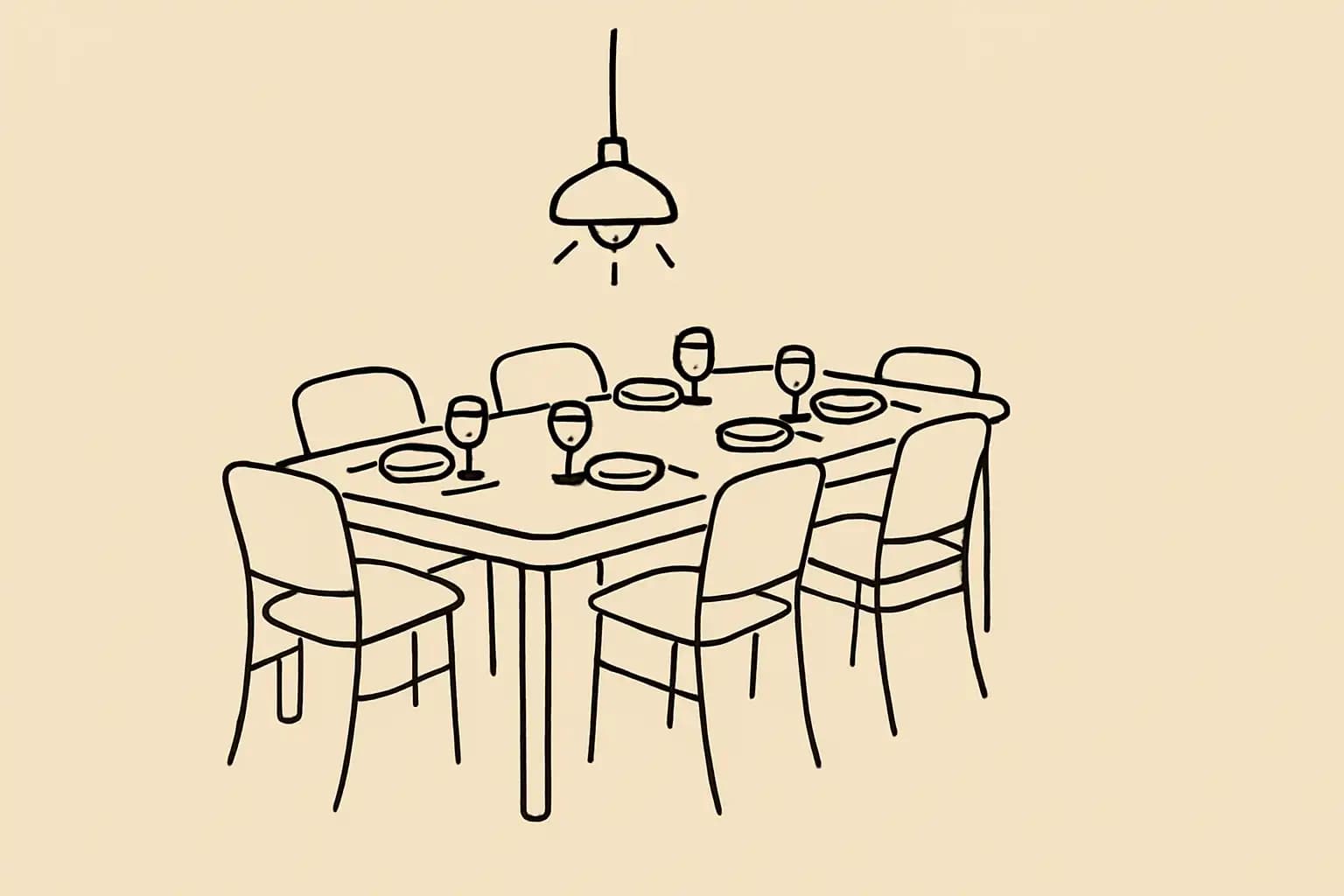
A designed hybrid is an intentional decision. You look at your capacity, pick a percentage to reserve for walk-ins, and set your booking system to cap reservations before you're full.
The common range is 60-70% of seats available for reservation, with the remaining 30-40% held for walk-ins. A 40-seat restaurant might make 26 seats bookable and keep 14 for whoever walks through the door.
This is a deliberate strategy. You're saying: "We want both audiences, and we're going to build our operations around serving them."
| Component | Designed Hybrid |
|---|---|
| Reservation cap | 60-70% of capacity |
| Walk-in seats | 30-40%, intentionally held |
| No-show impact | Contained. Empty reserved tables get absorbed by walk-in demand |
| Revenue risk | Lower on busy nights, slightly lower ceiling on slow ones |
| Operational demand | Moderate. Requires a capable host, but predictable |
| Guest experience | Walk-ins get seated faster. Reserved guests get their table. Both audiences feel welcome |
The designed hybrid works best for restaurants with strong foot traffic, neighbourhood regulars, and a concept that attracts spontaneous diners. Think: a bistro on a busy street, a wine bar in a walkable district, a brunch spot near a market.
Daniel Costa built the split into the rooms themselves on one stretch of Edmonton's Jasper Avenue. Uccellino, his casual trattoria, held half its seats for walk-ins. Bar Bricco, the wine bar a short walk away, took no reservations at all. Same operator, same block, two different answers to the same question.
Toast's Q3 2024 data found that 45% of all reservations were made for the same day. That's nearly half your booked guests deciding to eat at your restaurant hours before they show up. In a designed hybrid, those last-minute bookers compete for the reservation cap while your walk-in buffer absorbs the spontaneous crowd that doesn't book at all.
The real advantage is resilience. When three of your reserved tables no-show on a Friday night, you don't panic. Those seats were already filling from the walk-in flow. The no-shows are a disappointment, not a crisis.
Better guest experience. Bigger nights. $299. Once.
The emergent hybrid: walk-ins fill the cracks
An emergent hybrid looks like a reservation-only restaurant from the outside. Your booking system shows 100% of capacity as available for reservation. On paper, every seat is spoken for by 6:30 PM on a Saturday.
But in practice? Some of those tables open up. Cancellations trickle in. No-shows leave gaps. A party of four becomes a party of two. The 7:00 PM reservation runs late and the 9:15 PM slot opens. Walk-ins get seated in the spaces that reservations failed to fill.
The "hybrid" part wasn't designed. It emerged from the natural imperfection of a fully booked restaurant.
| Component | Emergent Hybrid |
|---|---|
| Reservation cap | 100% of capacity |
| Walk-in seats | 0% intentional, but 10-20% typically available via no-shows and cancellations |
| No-show impact | Directly creates your walk-in capacity. More no-shows = more walk-in seats |
| Revenue risk | Higher. Bad no-show nights mean empty tables with no walk-in buffer queued up |
| Operational demand | High. Host must juggle real-time gaps, manage waitlists on the fly, and re-pace the floor |
| Guest experience | Walk-ins face unpredictable waits. "We might have something in 45 minutes" energy |
This model is more common than most operators realize. It's the default when you set up a reservation system, make all your tables bookable, and let the chips fall. Industry data puts average no-show rates at 15-20% for restaurants without active mitigation strategies, which means a fully booked 40-seat restaurant is actually running 32-34 confirmed covers on any given night. The remaining 6-8 seats? That's your walk-in capacity, except it's accidental.
The irony: the emergent hybrid depends on bad reservation behaviour to function. If your no-show rate drops to 5% (which is what good confirmation systems achieve), you lose most of your walk-in capacity. Your restaurant becomes genuinely reservation-only by accident, turning away neighbourhood regulars who used to wander in.
Why the distinction matters: the economics are different
These aren't two versions of the same thing. They're two different business models hiding behind the same label.
Revenue ceiling. A designed hybrid caps its reservation revenue intentionally but captures walk-in revenue reliably. An emergent hybrid has a higher theoretical ceiling (100% booked) but a less predictable actual one. Toast reported that cancellation rates sat at 17% in Q3 2024, down from 19% the year before. For an emergent hybrid, that 2% improvement in guest behaviour actually shrank available walk-in capacity.
No-show risk. In a designed hybrid, a no-show is a minor annoyance. The walk-in buffer fills the gap. In an emergent hybrid, a no-show on a slow night is an empty table with no one waiting to take it. The designed model distributes risk. The emergent model concentrates it.
Staffing. A designed hybrid lets you staff to a predictable pattern: you know your reservation count and you know your walk-in seats exist. An emergent hybrid asks your host to make real-time capacity decisions all night. Which table just opened? How long until the next reservation arrives? Can we seat a walk-in for 75 minutes before we need that four-top back? That's a skilled role, and restaurants that don't recognize it often wonder why service feels frantic on busy nights.
Walk-in experience. 72% of diners say they won't wait more than 30 minutes for a walk-in table. In a designed hybrid, you can give walk-ins a realistic wait time because you know how many seats are theirs. In an emergent hybrid, you're guessing. "Maybe 20 minutes, maybe an hour, depends on who cancels." That uncertainty pushes walk-in diners to the restaurant next door.
The discovery problem both models share
Here's what neither model solves on its own: a diner searching for dinner on Google, OpenTable, or their phone can't tell the difference.
A designed hybrid that held back 14 walk-in seats shows up as "limited availability" on booking platforms. An emergent hybrid with 6 phantom walk-in seats from expected no-shows shows "fully booked." A walk-in-only restaurant shows "no availability" because it doesn't take reservations at all.
From the diner's screen, all three look like they can't get in. The discovery gap is the same regardless of which model you run.
This problem got more visible on April 20, 2026, when OpenTable acquired Montreal-based Libro, the reservation platform used by over 3,000 Canadian restaurants, many of them Quebec independents. For operators already on Libro, the integration means their walk-in capacity becomes even less visible. For operators who never used Libro because they run a walk-in or designed-hybrid model, the Canadian reservation landscape just got more consolidated around platforms that don't surface walk-in availability.
Which model fits your restaurant?
The right model depends on three things: your foot traffic, your concept, and your tolerance for operational complexity.
Choose a designed hybrid if:
You have consistent neighbourhood foot traffic. Your concept attracts spontaneous diners (wine bars, casual bistros, brunch spots). You want to serve both the "plan ahead" crowd and the "let's just go somewhere" crowd. You'd rather have a predictable floor than a theoretically full book. Your host is good but not superhuman.
Choose an emergent hybrid if:
Your demand consistently exceeds capacity. You're a destination restaurant where guests plan days or weeks ahead. Your no-show rate is low enough (under 8%) that the walk-in gap is manageable. You have an experienced host who can re-pace the floor in real time. You're comfortable turning away walk-ins most nights.
The honest question most operators skip: did you choose your model, or did it choose you?
If you set up your reservation system, made all your tables bookable, and never thought about it again, you're running an emergent hybrid by default. That might be fine. But it means your walk-in capacity is a byproduct of guest behaviour you don't control, not a strategic decision you made.
The alternative is choosing it on purpose even when demand would let you fill every seat. DOPO, Tony Migliarese's 42-seat room in Calgary's Marda Loop, landed fourth on Canada's 100 Best New Restaurants within months of opening and is genuinely hard to book. He keeps tables for walk-ins anyway.
How to move from emergent to designed
If you're running an emergent hybrid and want to switch, the shift is straightforward. It's a settings change and a mindset change, not a renovation.
Step 1: Know your actual numbers. Pull 90 days of reservation data. What's your no-show rate? Your same-day cancellation rate? Your average party size versus booked party size? These numbers tell you how much phantom walk-in capacity you've been running.
Step 2: Set a reservation cap. Start at 70% of your seats as reservable. If you have 40 seats, make 28 bookable. Adjust after two weeks based on demand.
Step 3: Communicate the change. Your host needs to know that walk-in tables exist on purpose, not as leftovers. "We have six tables for walk-ins tonight" is a different sentence than "We might be able to fit you in if someone cancels."
Step 4: Watch your no-show policy. In a designed hybrid, your cancellation policy protects fewer seats but matters just as much. The 70% you did book should show up. Card-on-file, confirmation texts, and clear cancellation windows still apply to your reserved covers.
Step 5: Track what changes. Compare walk-in revenue, average wait times, and total covers per service before and after the switch. Most restaurants that make this shift see total covers stay flat or increase, because walk-in seats fill faster when they're intentional.
The model you don't see: reservation-only and walk-in-only
For completeness: these two aren't hybrid models at all, but they sit at opposite ends of the spectrum.
Reservation-only (every seat bookable, no walk-in seating) works for high-demand, destination restaurants where guests plan ahead and the waitlist is a status signal. Walk-in-only (no reservations taken) works for counter-service, casual, and neighbourhood joints where spontaneity is the culture. Both are clean, honest models.
Walk-in-only isn't only for counter service, either. When Chris Gama and Raya Konrad opened Baby Baby in Winnipeg's Osborne Village in 2025, they made it a full dinner room with no reservations at all. It was an Air Canada Best New Restaurants finalist within six months.
The hybrid is where complexity lives. And the gap between designed and emergent is where most operational confusion hides.
What this means for your no-show strategy
Your hybrid model directly shapes how no-shows affect your business.
In a designed hybrid, no-shows hurt but don't destabilize. You built a buffer. The average Canadian restaurant loses $1,500-$3,000 monthly to no-shows, but a designed hybrid absorbs that loss through walk-in revenue that was always planned for.
In an emergent hybrid, no-shows are structurally necessary but financially painful. You need them to create walk-in space, but each one represents a cover that was supposed to generate revenue. And if you implement a card-on-file policy that drops your no-show rate to 5%, you've just eliminated most of your walk-in capacity without realizing it.
The fix isn't to tolerate no-shows. It's to know which model you're running so you can build the right response. Reduce no-shows and open walk-in capacity intentionally, rather than reducing no-shows and accidentally locking out half your potential guests.
Sources: Toast 2024 Reservation Trends, Toast 2025 Reservation Data, Alexandrov & Lariviere, "Are Reservations Recommended?" (Kellogg School), EatApp Restaurant No-Shows, Modern Restaurant Management, BetaKit: OpenTable Acquires Libro.
Frequently Asked Questions
What is a designed hybrid reservation model?
A designed hybrid intentionally caps reservations at 60-70% of a restaurant's seating capacity and holds the remaining seats for walk-in diners. It's a deliberate operational choice that creates a predictable walk-in buffer and reduces the impact of no-shows on revenue.
What is an emergent hybrid reservation model?
An emergent hybrid makes 100% of seats available for reservation but ends up seating walk-ins in gaps created by no-shows, cancellations, and party-size changes. The walk-in capacity isn't planned; it's a byproduct of imperfect reservation behaviour.
How does your hybrid model affect no-show impact?
In a designed hybrid, no-shows are absorbed by the walk-in buffer and cause less disruption. In an emergent hybrid, no-shows create the only walk-in capacity available, making the restaurant paradoxically dependent on the problem it's trying to solve.
How do I switch from emergent to designed hybrid?
Pull 90 days of reservation data to understand your actual no-show and cancellation rates, then set a reservation cap (start at 70%), communicate the change to your host team, and track covers and walk-in wait times over two weeks to calibrate.
What percentage of seats should I hold for walk-ins?
Industry guidance suggests starting with 20-30% of tables reserved for walk-ins (meaning 70-80% bookable). Adjust based on your foot traffic patterns, concept type, and location. High-foot-traffic neighbourhood spots may hold 40%; destination restaurants may hold 10% or none.